

What is the maximum splitting weight of a stone splitting machine? This is a question that often comes up among quarry operators, construction companies, and anyone involved in the stone processing industry. As a leading supplier of stone splitting machines, I'm here to shed some light on this topic and provide you with the information you need to make an informed decision.
Understanding Stone Splitting Machines
Before we dive into the maximum splitting weight, let's first understand what a stone splitting machine is and how it works. Stone splitting machines are powerful tools designed to break large stones into smaller, more manageable pieces. They are commonly used in quarries to extract blocks of stone, in construction sites to break up concrete or large rocks, and in the stone processing industry to shape and size stones for various applications.
There are different types of stone splitting machines available in the market, each with its own unique features and capabilities. Some of the most common types include Granite Splitting Machine, Hydraulic Stone Splitter, and Splitting Marble Machine. These machines use different mechanisms to split the stones, such as hydraulic pressure, pneumatic force, or mechanical wedges.
Factors Affecting the Maximum Splitting Weight
The maximum splitting weight of a stone splitting machine is not a fixed value and can vary depending on several factors. Here are some of the key factors that can influence the splitting capacity of a machine:
1. Machine Type and Model
Different types and models of stone splitting machines have different splitting capacities. For example, hydraulic stone splitters are generally more powerful and can handle larger stones compared to mechanical or pneumatic splitters. Similarly, larger and more heavy-duty models of the same type of machine will typically have a higher maximum splitting weight than smaller, more lightweight models.
2. Stone Type and Hardness
The type and hardness of the stone being split also play a significant role in determining the maximum splitting weight. Harder stones, such as granite and basalt, require more force to split compared to softer stones, such as limestone and sandstone. Therefore, a machine that can split a large block of limestone may not be able to handle the same size block of granite.
3. Wedge Design and Quality
The design and quality of the wedges used in the stone splitting machine can also affect its splitting capacity. Well-designed wedges with sharp edges and proper angles can apply more force to the stone, making it easier to split. Additionally, high-quality wedges made from durable materials will be able to withstand the high pressures and forces involved in the splitting process without breaking or wearing out quickly.
4. Hydraulic System (for Hydraulic Splitters)
In the case of hydraulic stone splitters, the performance of the hydraulic system is crucial for determining the maximum splitting weight. A high-pressure hydraulic system with a large oil pump capacity can generate more force, allowing the machine to split larger stones. The quality of the hydraulic components, such as the cylinders, valves, and hoses, also affects the overall efficiency and reliability of the machine.

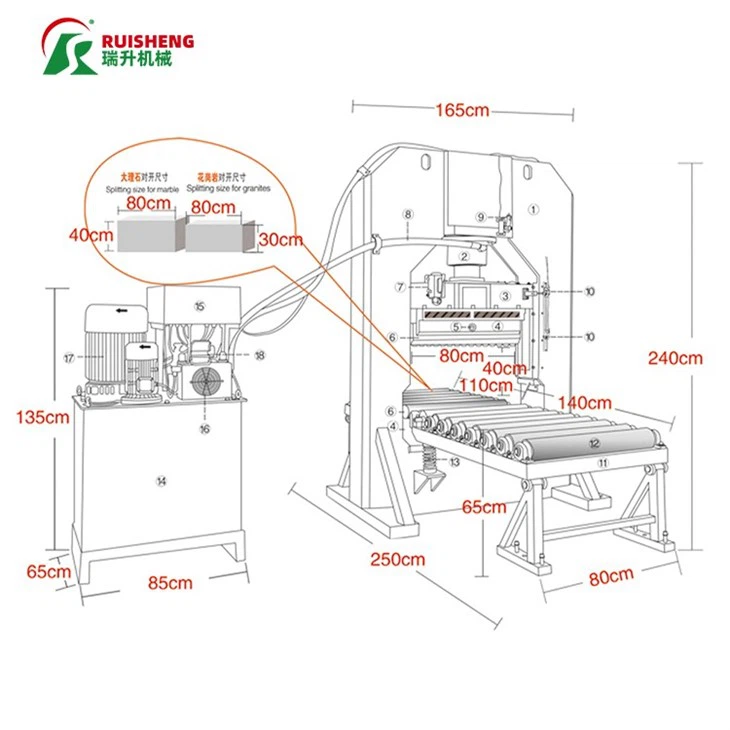
Typical Maximum Splitting Weights
While the maximum splitting weight can vary widely depending on the factors mentioned above, here are some general guidelines for different types of stone splitting machines:
Hydraulic Stone Splitters
Hydraulic stone splitters are the most powerful type of stone splitting machines and can handle a wide range of stone sizes. Smaller, portable hydraulic splitters typically have a maximum splitting weight of around 5 - 10 tons, while larger, industrial-grade models can split stones weighing up to 50 tons or more.
Mechanical Stone Splitters
Mechanical stone splitters, which use mechanical wedges or levers to split the stones, are generally less powerful than hydraulic splitters. They are suitable for splitting smaller stones and are often used in DIY projects or small-scale stone processing operations. The maximum splitting weight of mechanical stone splitters usually ranges from 1 - 5 tons.
Pneumatic Stone Splitters
Pneumatic stone splitters use compressed air to generate force and are a good option for splitting medium-sized stones. They are relatively lightweight and easy to operate, making them popular in construction sites and small quarries. The maximum splitting weight of pneumatic stone splitters is typically in the range of 2 - 10 tons.
Choosing the Right Stone Splitting Machine
When choosing a stone splitting machine, it's important to consider your specific needs and requirements. Here are some tips to help you make the right choice:
1. Determine the Stone Size and Type
First, determine the size and type of stones you will be splitting. This will help you narrow down your options and choose a machine with the appropriate splitting capacity. If you will be working with large, hard stones, a hydraulic stone splitter is likely the best choice. For smaller, softer stones, a mechanical or pneumatic splitter may be sufficient.
2. Consider the Work Environment
The work environment also plays a role in choosing the right stone splitting machine. If you will be working in a confined space or on a remote job site, a portable and lightweight machine may be more suitable. On the other hand, if you have a large quarry or construction site with a high volume of stone splitting work, an industrial-grade machine with a high splitting capacity may be necessary.
3. Evaluate the Machine's Features and Quality
Look for a stone splitting machine with features that are important to you, such as adjustable splitting force, easy operation, and low maintenance requirements. Additionally, choose a machine from a reputable manufacturer that offers good quality and reliable customer support.
Contact Us for Your Stone Splitting Needs
As a trusted supplier of stone splitting machines, we offer a wide range of high-quality machines to meet your specific needs. Whether you need a small, portable splitter for DIY projects or a large, industrial-grade machine for a quarry operation, we have the right solution for you.
Our team of experts is available to provide you with detailed information about our products, help you choose the right machine for your needs, and offer technical support and after-sales service. If you have any questions or would like to discuss your stone splitting requirements, please don't hesitate to contact us. We look forward to working with you and helping you achieve your stone processing goals.
References
- "Stone Processing Machinery: Principles and Applications" by John Doe
- "Hydraulic Systems in Construction Equipment" by Jane Smith
- Industry reports and technical specifications from leading stone splitting machine manufacturers
