

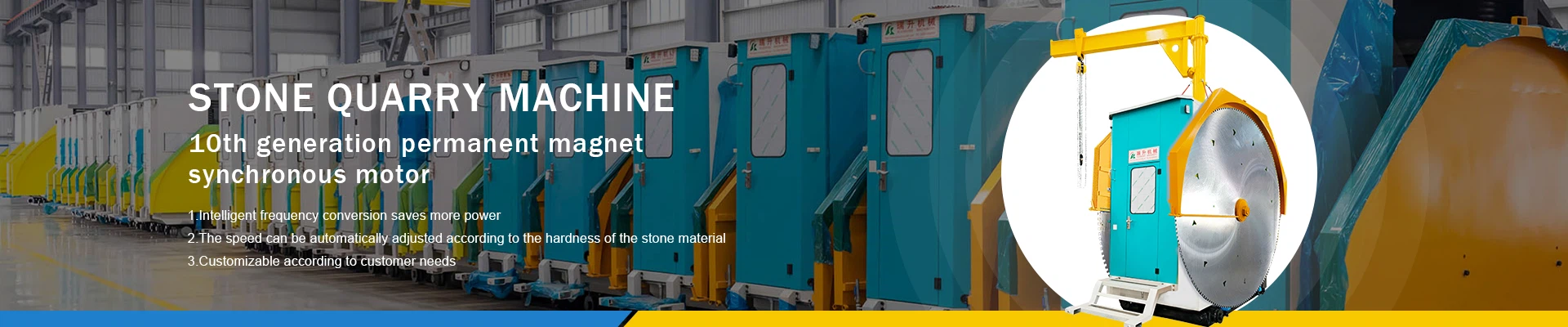








Stone Processing Saw Blade
Ruisheng Machinery is a brand under Nan'an Ruilong Machinery Co., Ltd. Ruisheng Machinery has been focusing on stone mining and stone processing equipment in China for many years. We started as a small business but have now become one of the leading suppliers in China's stone industry. Our products include double-blade mining machinery, diamond wire saw machines, block-cutting machines, large plate-cutting machines stone polishing machines, etc.
Why Choose Us?
Rich product range
Our company can manufacture and produce double-edged stone mining machines, diamond wire saw machines, stone mining equipment, stone engraving machines, water jet cutting and more.
Products widely used
Our products can be widely used in granite, marble and other stone mining, as well as block cutting, slate cutting, special-shaped carving, tabletop processing, tombstone stone processing, stone waterjet cutting and other purposes.
Widely sold
The market share of our product double-edged mining equipment exceeds 70%, and the main sales markets of our stone machinery are Central Asia, Southeast Asia, Russia, the Middle East, Africa and other regions.
Leading service
We have many years of industry experience and a complete production management, quality supervision, sales service operation system. Whether you want to buy a diamond wire saw or a stone polishing machine, just send your requirements via email and we can customize the product for you.


A Stone Processing Saw Blade, also known simply as a stone saw blade or stone cutting blade, is a specialized tool designed for cutting and processing various types of stone materials. These blades are commonly used in industries such as construction, masonry, landscaping, and stone fabrication for cutting stone blocks, slabs, tiles, and other stone products with precision and efficiency.
Benefits of Stone Processing Saw Blade
Speed
The faster you finish the cutting, the better your chances of staying on schedule and within budget. With this in mind, the stone processing saw blade is your best bet to finish your project faster. Stone processing saw blades are known for their efficiency in creating precise cuts at a fast pace. The turbo blade has a continuous outer rim and a serrated edge. This allows the stone processing blade to sustain high speeds and create precise cuts.
Durability
Compared to other blades, they have exceptional longevity because of their unique design, which includes a circular steel disk with segments on the outer edge. These segments consist of a combination of stone processing and metal bond powder that are fused together through high heat and pressure. This contributes to the longevity and durability of the stone processing saw blade.
Precision
Stone processing saw blades provide incredibly precise cuts with less vibration and strain on the concrete structure. This is due to the stone processing’s high performance and its ability to evenly distribute the stone processing across the blade. What’s more, stone processing saw blades are optimal for cutting through even harder materials such as rebar and stainless steel. The low vibration generated by stone processing saw blades also helps to reduce noise pollution when working in an urban setting.
Comfort
Not only are stone processing saw blades an ideal choice for any concrete cutting job, they’re also designed with comfort in mind They offer ease of use and an efficient way to get the job done quickly and without creating too much mess. The stone processing blade is designed to cut through concrete with minimal chipping and breakages, while also producing significantly less noise than other types of concrete cutting blades. Additionally, stone processing saw blades can remove the excess slurry that is produced during the cutting process, reducing dust generation. This makes using stone processing saw blades a comfortable choice for any job.
Environmentally Friendly
Stone processing blades produce minimal dust and waste, resulting in a cleaner and safer work environment. Furthermore, many stone processing blade manufacturers employ eco-friendly manufacturing processes and use recycled materials, reducing the overall environmental impact of the blades.
Versatility
Stone processing saw blades are incredibly versatile and can be used for a wide range of concrete cutting applications. Whether it’s cutting through reinforced concrete, asphalt, brick, or stone, stone processing blades can handle the task with ease. Their versatility makes them suitable for various construction projects, including building construction, roadwork, renovations, and demolition. Additionally, stone processing blades come in different sizes and configurations to accommodate different cutting requirements, providing contractors with flexibility and efficiency on the job site.
Reduced Noise And Vibration
Stone processing saw blades are designed to minimize noise and vibration during the cutting process, providing a quieter and smoother cutting experience. This is achieved through the use of advanced blade designs and manufacturing techniques that dampen vibrations and reduce noise levels.
Improved Operator Safety
Safety is a top priority on any construction site, and stone processing saw blades help enhance operator safety during concrete-cutting operations. The precision and stability of stone processing blades reduce the risk of accidents and injuries associated with traditional cutting methods, such as kickback or blade binding.

Bond
This metal matrix holds the diamonds in place. A softer bond wears down quicker, exposing new diamonds for continuous cutting, while a harder bond offers more durability but may become less effective over time.
Diamond Concentration
Refers to the amount of diamonds in the blade’s cutting segment. Higher concentration means more diamonds in contact with the material, leading to faster cutting.
Segment Type
Segmented blades are best for dry cutting, whereas continuous rim blades are ideal for wet cutting and provide a smoother finish.
Gullets
Spaces between segments help in cooling and debris removal.
Features of Stone Processing Saw Blade
Strong hardness and wear resistance
Diamond is the hardest substance found in nature, so granite cutting blades have strong hardness and wear resistance.
Very sharp edge
The edge of a diamond tool can be very sharp.
Good thermal conductivity
Diamond has thermal conductivity and thermal diffusivity, cutting heat is easy to emit, and the cutting part of the saw blade temperature is low.
Low thermal expansion coefficient
The thermal expansion coefficient of diamond is smaller than that of cemented carbide, and the tool size change caused by cutting heat is small.
Diamond Blade
This blade is made of high-quality industrial diamonds that are embedded in a metal matrix. Diamond blades are created to deliver precise and smooth cuts through hard and abrasive materials without cracking or chipping the surface. They are an excellent choice for both dry and wet cutting operations and can be used on a wide range of machines like angle grinders, circular saws, and tile saws.
Carbide-Tipped Blade
These blades are designed with a carbide tip that is welded onto the edge of the blade. Carbide tipped blades are ideal for cutting through thick and dense materials like concrete and granite. They deliver clean and accurate cuts while also being durable enough to withstand heavy use.
Masonry Abrasive Blades
These blades are made of a mixture of abrasive particles and resin-bonded materials that make them perfect for cutting through dense and hard materials. They come in different sizes and shapes and can be used on a variety of surfaces including concrete, brick, and tile.
Turbo Stone Cutting Blades
These blades are designed with a scalloped edge that helps to reduce friction and heat buildup during cutting. They are excellent for cutting through a wide range of materials including concrete, brick, and natural stone.
How to Choose the Stone Processing Saw Blade?
Assess the Material
First, identify the specific type of material you will be cutting. Different materials require different blade specifications. For example, dense materials like granite or porcelain will need a diamond blade with a soft bond to ensure efficient cutting, while softer materials like limestone are better matched with a blade that has a harder bond.
Wet or Dry Cutting
Decide whether you will be performing wet or dry cutting. Wet cutting blades are designed to be used with water to reduce dust and cool the blade, extending its lifespan. Dry cutting blades are more versatile and can be used without water, making them suitable for situations where water use is impractical.
Blade Size and Compatibility
Ensure the blade size is compatible with your saw. Using a blade that is too large or too small for your saw can be unsafe and may reduce the efficiency of your cuts. Also, consider the arbor size to ensure a proper fit.
Cutting Speed and Finish
Consider how fast you need to complete your project and the finish quality you require. Turbo blades and segmented blades are ideal for fast cutting, while continuous rim blades offer a smoother finish for materials that are prone to chipping.
Budget and Blade Lifespan
Evaluate your budget and the expected lifespan of the blade. While high-quality diamond blades may have a higher upfront cost, their durability and efficiency can provide better value over time compared to cheaper, abrasive blades that wear down more quickly.
Safety Features
Look for blades that come with integrated safety features, such as anti-vibration technology and cooling holes, to enhance the user’s safety and comfort during operation.
Cleaning Saw Blades
There are several ways to clean your saw blades. For removing surface dust and debris, you can simply use a can of compressed air to loosen and remove stubborn particles from the blade. For handling slurry and other hard-to-remove stains, consider creating a mixture of cleaning agent with soap and water. You can soak the blade for a few minutes, scrubbing the stains with a synthetic or metal bristle brush. Finally, rinse your blade with clean water and dry it completely. Whenever you use water on a metal saw blade, you need to make sure to dry the blade thoroughly and quickly before rust can form. Once you’ve thoroughly washed and dried your blade, you can store it before its next use.
Proper Saw Blade Storage
Too much moisture or fluctuating levels can cause humidity and condensation, which will rust your saw blades. Temperature variations can cause hairline cracks and other damage. The best place to store these blades is inside a temperature-controlled moisture-proof toolbox. Make sure that the blades have a snug fit, so they don’t rattle around inside your storage.
Saw Blade Repairs
If you notice damage to one of your blades, safely store it away and schedule repairs with a professional. The thought of putting one of their tools out of commission for repairs might elicit frustration in some contractors. However, a temporary decrease in productivity is better than damaging these tools further or causing an accident on the job site. Never continue to use a saw blade or any other workshop tool if it shows signs of damage.
Common Troubleshooting and Fixes
A lack of proper care and maintenance can lead to issues with your saw blades. Improper use could also be to blame for common troubleshooting errors that you experience on the job. One of the most common troubleshooting issues with saw blades is segment loss and chipping. If you notice your saw blades are losing segment after segment, you may need to switch to a softer bond. The rule of thumb is to use a softer bond or harder materials and vice versa. This incorrect choice of blade could also be the reason your saw blades aren’t grinding or cutting materials properly. Additionally, always remember to replace worn parts and missing segments.

Our Factory


FAQ