







Diamond Tools
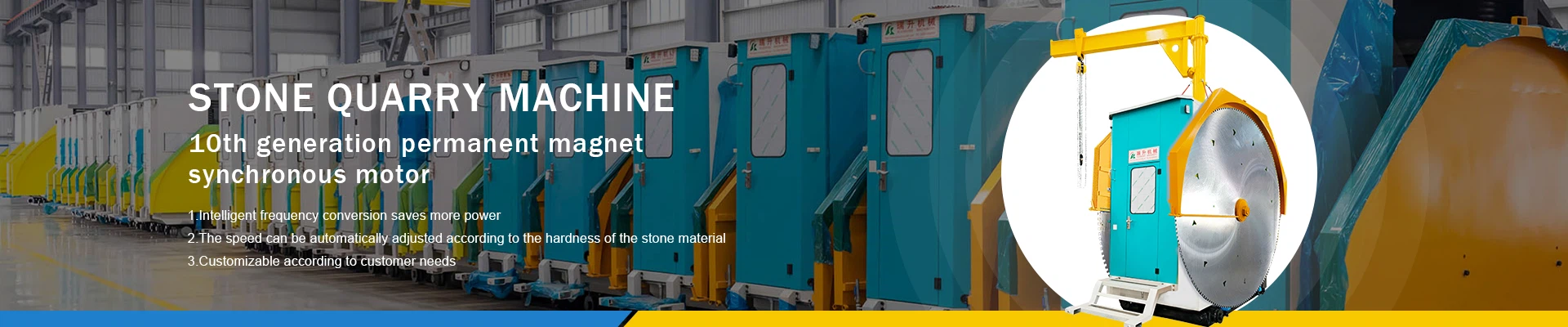
Ruisheng Machinery is a brand under Nan'an Ruilong Machinery Co., Ltd. Ruisheng Machinery has been focusing on stone mining and stone processing equipment in China for many years. We started as a small business but have now become one of the leading suppliers in China's stone industry. Our products include double-blade mining machinery, diamond wire saw machines, block-cutting machines, large plate-cutting machines stone polishing machines, etc.
Why Choose Us?
Rich product range
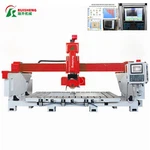
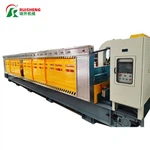
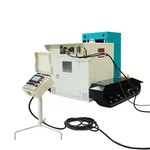
Our company can manufacture and produce double-edged stone mining machines, diamond wire saw machines, stone mining equipment, stone engraving machines, water jet cutting and more.
Products widely used
Our products can be widely used in granite, marble and other stone mining, as well as block cutting, slate cutting, special-shaped carving, tabletop processing, tombstone stone processing, stone waterjet cutting and other purposes.
Widely sold
The market share of our product double-edged mining equipment exceeds 70%, and the main sales markets of our stone machinery are Central Asia, Southeast Asia, Russia, the Middle East, Africa and other regions.
Leading service
We have many years of industry experience and a complete production management, quality supervision, sales service operation system. Whether you want to buy a diamond wire saw or a stone polishing machine, just send your requirements via email and we can customize the product for you.


Diamond tools are cutting, grinding, or drilling tools that use diamond as an abrasive material. Diamond tools offer several advantages over traditional tools made of materials like steel or carbide. They provide faster cutting speeds, longer tool life, and greater precision, making them essential in industries such as construction, manufacturing, mining, and stone processing.
Benefits of Diamond Tools
Cost- Efficiency
It’s all about efficiency. This machine can cut through materials in a flash, and it doesn’t waste much either. That means you spend less on running the show. It’s a bit of a multitasker, too. It can often do the job of several machines, so you’re not shelling out for a whole bunch of equipment and maintenance. Double win for your budget!
Energy Efficiency
In our world that’s becoming more and more eco-friendly, businesses are really into saving energy. Diamond Tools is totally on board with this green trend. It’s built to be super energy-efficient, which means it doesn’t gobble up power like a hungry monster. It’s like having your cake and eating it too – you save money on energy bills and shrink your carbon footprint at the same time.
Particle Size Control
Another benefit of using diamond tools is controlling particle size. This is a big deal in loads of industries. You want your stuff to be just the right size, right? That’s where our product really shines. It’s like having a magic wand for particle size control. You can tweak the machine’s settings to get exactly the diamond size you want.
Ease of Use
Using diamond tools is pretty straightforward. Most of them come with controls that are easy to understand, so starting and stopping the machine is a breeze. You can also tweak some settings on these grinders. For instance, you can adjust the rotor speed and the size of the screen openings. This makes it simple to adapt the machine to handle different materials and get the size you want.
Maintenance
Keeping diamond tools in tip-top shape isn’t a headache at all. No need to invest loads of time in it. The main things you’ll do are regular cleaning and giving a good once-over to certain parts, like the hammers, screens, and bearings. Many of these grinders even come with a handy self-cleaning feature that prevents nasty clogs and dust buildup.
High Production Capacity
This machine is all about high production capacity. It can handle a ton of material in no time flat. So, if you’re in an industry that needs stuff made fast and in big quantities, this machine has your back.

Welding Machine For Diamond Segment
A welding machine for diamond segments is a specialized piece of equipment used in the manufacturing of diamond tools, such as diamond saw blades, grinding wheels, and core drills. These machines are specifically designed to weld diamond segments onto the steel cores or bodies of the tools, creating a strong and durable bond between the diamond segments and the tool substrate.
Diamond Circular Saw Blade Welding Rack
A Diamond Circular Saw Blade Welding Rack is a specialized piece of equipment used in the manufacturing process of diamond circular saw blades. It is designed to hold the various components of the saw blade in place during the welding process, ensuring precise alignment and proper bonding of the diamond segments to the blade core.
Fully Automatic Hammer Machine
Fully automatic saw blade old segments disassembly machine time saving and labor saving, Removed saw blade segments, high speed in working, easy to operate. Fully automatic old segments dismantling machine Designed for quick and easy removal of the cutting head from a diamond saw blade. Provide efficient disassembly methods, save labor and time costs, and improve production efficiency.
Core Drill Bit Welding
Fully Automatic Brazing Stand of Core Drill Bit Segments is a special equipment used for the automated welding of diamond drill bits. The entire equipment adopts automation technology and can automatically complete the alignment, positioning and welding processes of the drill bit, reducing manual intervention.
Semi-Automatic Brazing Frame for Diamond Blade
The equipment combines semi-automatic technology to automatically complete some steps, reducing manual intervention and improving efficiency. The equipment can achieve high-precision blade welding to ensure welding quality and strength. The equipment is designed to be easy to operate, allowing operators to quickly get started and perform welding work.
Geological or project exploration
Diamond geological drill bits, diamond oil drill bits, and diamond thin-wall drill bits are often used. The main application of drilling bits is in the oil and natural gas industries and the mining industry.
Stone processing
Diamond circular saw blades, diamond gang saws, and diamond band saws are used to saw marble, granite, and other stone blocks. Diamond wire saws are used in stone quarries to exploit raw stone blocks. Shaped diamond tools are used to process stone to a particular shape. Resin-bonded diamond polishing pads are used to polish stone.
Construction
Medium or small-sized diamond saw blades, diamond core drill bits, and some diamond grinding or polishing tools are often used in repairing roads, remodeling buildings, and processing building materials.
Woodworking
Composite laminate flooring is widely used. It is wearable as stone. PCD circular saw blades, profiling cutters, twist drill bits, and other diamond tools are used in its processing.
Auto spare parts processing
PCD and PCBN cutting tools are used to meet the high efficiency and low deviation processing requirements in this domain.
IT and home appliance products processing
High-precision super-thin diamond cutting wheels are used to cut silicon slices. Resin-bonded diamond grinding wheels are used to process ceramics in optical fiber industry.
Engineering ceramics processing
They have the properties of high toughness, high hardness, high-temperature resistance. High-toughness and durable diamond grinding wheels are developed to process them.
Carbide tools and other mechanical tools processing
Diamond tools are used to gain high processing precision and efficiency.
Features of Diamond Tools
Increased Efficiency
The diamond tools eliminate manual intervention in repetitive tasks, resulting in quicker production times. The diamond tools can also operate continuously, without breaks or shifts, further maximizing output.
Enhanced Productivity
The diamond tools improve overall productivity by minimizing errors and reducing waste. In an automated environment, the probability of human error is significantly reduced, and manufacturers can maintain consistent quality, even as volumes increase.
Greater Precision
The diamond tools offer unprecedented accuracy and precision. In industries where a fraction of a millimeter can make a difference, the consistency delivered by automation can be the difference between success and failure at quality inspection.
Improved Safety
Manual welding can be serious and can lead to significant injuries, fatalities, and substantial financial losses. The diamond tools can handle the dangerous tasks that often come up in fab shops— limiting human exposure to potential hazards. This contributes to a safer working environment and fewer injuries!
Visual inspection
When visually inspecting welds, the weld is checked for any flaws that are visible to the naked eye using a few aids such as a magnifying glass, an endoscope, or a camera. This makes it possible to directly detect any obvious defects or deviations in shape and size.
Laser triangulation
With this method, laser points or beams and cameras with sensors are used to record the surface geometry of the weld. By evaluating the reflected light and the angle it hits the sensors, geometric defects such as warping or distortions in the weld can be identified. This technology makes it possible to assess the weld quality quickly and precisely.
Digital image processing
High-resolution cameras and the corresponding software can be used to develop automated testing procedures for quality control and evaluation of welds.
Magnetic particle inspection
Surface cracks can be detected by magnetizing the part and applying magnetic powder to the weld. Flaws such as lack of fusion generate small leakage fields on the surface which attract the magnetic powder.
Dye penetrant inspection
During this weld inspection, a colored test agent is applied to the weld, which settles in cracks and makes them visible.
Ultrasonic testing
Ultrasonic examinations can be used to detect discontinuities and flaws in the material. During ultrasonic testing, an ultrasonic transducer sends sound waves through the material, which are reflected at defective areas. The returning waves can be analyzed to precisely detect both surface and internal discontinuities.
Regularly Inspect and Test Major Parts
Being aware of the major components and what preventive steps are required to keep them in good working order can help avoid equipment failures and downtime. Have your welding system checked and tested regularly by an experienced service technician on an annual basis in addition to routine weekly inspections and monitoring.
Know and Assess Risks Routinely
Just because a part is not considered major does not mean its malfunction cannot pose safety risks. Therefore, a welding risk assessment should be an ongoing process and include visual inspections of all weld head and power supply electrical connectors, fittings, and cables, as well as airflow vents.
Schedule Minor Preventive Maintenance During Regular Downtime
For routine inspections or repairs that can be done on-site and are not time-consuming, regular maintenance can be scheduled when the equipment is not in use. This should be in addition to the daily checks and risk assessments that are done before regular shifts.
Optimize Scheduled Major Maintenance
While the best time for major maintenance is between projects, this may not always be possible. Therefore, major maintenance or repairs should be carefully scheduled with the goal of minimizing the effect on productivity. Factors that should be considered include:
● Customer’s project schedule
● Service provider’s turnaround time
● Staffing availability

Welding Method
Determine the welding method that aligns with your requirements. If precision and aesthetics are crucial, TIG welding might be the best choice. If speed and versatility are paramount, robotic or automated MIG welding may be more suitable.
Materials
Consider the types of materials you'll be working with. Different automatic welding machines are optimized for specific materials, so ensure the machine you choose can handle your desired materials, whether it's steel, aluminum, or exotic alloys.
Welding Volume
Assess the volume of welding you'll be performing. For high-volume production, a robust and efficient machine with automation capabilities is essential. Smaller-scale operations might benefit from a more compact solution.
Software and Programming
A user-friendly interface and robust programming capabilities are essential. The machine should be easy to program, allowing you to quickly adapt to changing production requirements.
Customization
Consider whether the machine allows you to customize welding parameters to match the requirements of your projects. Flexibility in programming is essential for accommodating diverse welding tasks.
Ease of Use
A user-friendly interface and intuitive controls make a significant difference in the ease of operation. Training operators should be straightforward, and the machine's interface should support efficient workflow.
Service and Support
Ensure that the manufacturer provides excellent customer support and offers maintenance and repair services. A reliable support system minimizes downtime and ensures the longevity of the machine.
Cost Considerations
While cost is a factor, it's essential to focus on the long-term return on investment. A slightly higher upfront cost for a high-quality machine with lower operating expenses can provide significant savings over time.
Our Factory


FAQ