

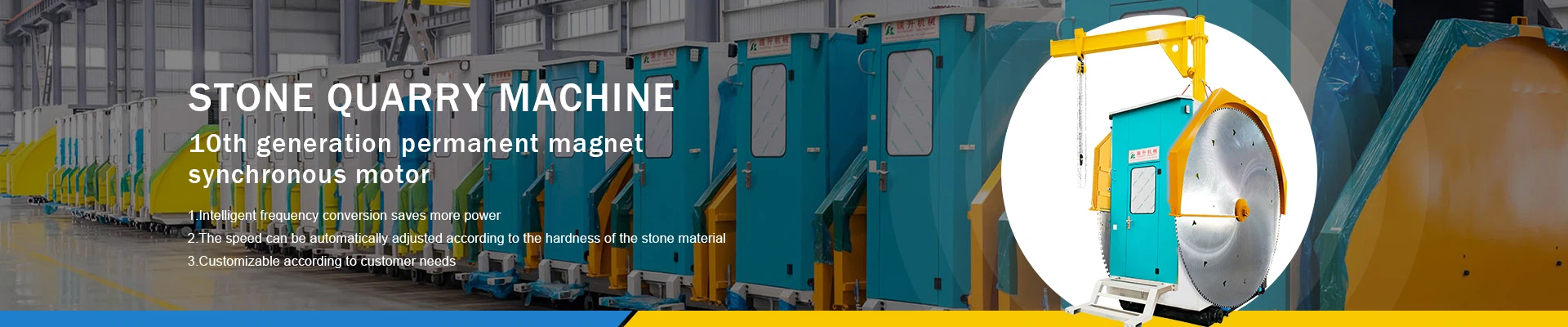
When it comes to industrial stone cutting, "fast" and "accurate" are often seen as competing goals-but the RS-1200/1400/1600 Infrared Bridge Cutter breaks that tradeoff. As a staple in modern stone fabrication workshops, this machine merges infrared positioning tech, heavy-duty mechanics, and scalable design to deliver consistent, high-quality cuts at scale. Let's dive into how its engineering choices solve real-world processing pain points.
The Core Problem It Solves
Stone fabricators face two persistent challenges:
- Handling variable material sizes: From 600mm small slabs to 1600mm large stone blocks, most cutters force shops to invest in multiple machines.
- Maintaining precision under load: High-power cutting often leads to vibration, which ruins edge quality and shortens blade life.

How the RS Series Addresses This
1.Modular Sizing: One Platform, Three Capabilities
The RS line uses a shared bridge-frame architecture with scaled critical components to cover different use cases:
- Blade diameter range: φ600–1200mm (RS-1200) up to φ800–1600mm (RS-1600) - no need for separate small/large material cutters.
- Vertical stroke scalability: 850mm (1200) → 1050mm (1600) - accommodates thicker stone without manual adjustments.
This modularity cuts equipment costs while keeping workshop floor space efficient.
2.Vibration-Dampening Design for Precision
To eliminate cutting errors from vibration:
- The frame uses a heavy-duty welded structure (total weight up to 7500kg) to absorb operational shocks.
- The bridge beam is reinforced with high-tensile steel, ensuring minimal deflection even at maximum motor load (33.5kW for RS-1600).
Paired with infrared positioning sensors, this design reduces cutting deviation to ±0.5mm-critical for high-end decorative stone projects.
3.Practical Features for Sustained Productivity
- Water circulation system: 4–5m³/h water flow cools the blade and suppresses dust, extending blade life by 30% vs. dry cutting and improving workshop air quality.
- 3000×2000mm workbench: Large surface area + 0–90° rotation capability reduces material repositioning time by 40% for complex cuts.

Who Should Use It?
For mid-to-large stone fabrication shops, the RS series strikes the perfect balance:
- RS-1200: Ideal for small-batch decorative panel cutting.
- RS-1400/1600: Built for high-volume large slab processing (e.g., commercial building facade materials).

Final Takeaway
The RS Series isn't just a cutter-it's a scalable precision system that aligns with modern fabrication needs: lower equipment overhead, higher cut quality, and longer operational uptime. For shops looking to upgrade from basic cutters to a versatile workhorse, it's a investment that pays off in both output and product consistency.


