

An excavator is a versatile piece of heavy construction equipment designed to perform a wide range of tasks on construction sites, mining operations, and other industrial projects. Here's a detailed look at what excavators do and their various applications:
Primary Functions
1.Excavation:
Soil and Rock Removal: Excavators are primarily used to dig and remove soil, rock, and other materials. They are essential for creating foundations, trenches, and holes.
Grading and Leveling: They can be used to grade land, preparing it for construction or landscaping projects.
2.Material Handling:
Loading and Unloading: Excavators can load materials such as soil, gravel, and sand into trucks or other vehicles.
Material Movement: They can move materials around a construction site efficiently.
3.Demolition:
Structure Demolition: Excavators equipped with demolition attachments can be used to tear down buildings and other structures.
Debris Removal: They can clear debris from demolition sites.
4.Trenching:
Utility Trenches: Excavators are commonly used to dig trenches for laying pipes, cables, and other utilities.
Drainage Systems: They can create drainage ditches and channels.
5.Landscaping:
Site Preparation: Excavators can prepare land for landscaping projects by removing vegetation, leveling ground, and creating slopes.
Water Features: They can dig ponds, lakes, and other water features.
Secondary Functions
1.Compaction:
Soil Compaction: Some excavators come with attachments that can compact soil, ensuring a stable base for construction.
2.Piling:
Pile Driving: Excavators can be fitted with pile drivers to drive piles into the ground for foundation work.
3.Crushing:
Material Crushing: With the right attachments, excavators can crush rocks and other materials on-site.
Types of Excavators and Their Uses
Mini Excavators:
Compact Spaces: Ideal for small construction sites, landscaping, and utility work in tight spaces.
Ease of Transport: Easier to transport and maneuver in confined areas.
Standard Excavators:
Versatility: Suitable for a wide range of construction tasks, including foundation work, trenching, and grading.
Power and Reach: Provide more power and reach compared to mini excavators.
Heavy Excavators:
Large-Scale Projects: Used in mining, large construction projects, and heavy-duty demolition.
High Capacity: Can handle large volumes of material and perform heavy lifting.

Attachments and Tools
Excavators can be fitted with a variety of attachments to enhance their functionality:
Buckets: For digging and moving materials.
Breakers: For breaking rocks and concrete.
Grapples: For handling large objects.
Compactors: For compacting soil.
Augers: For drilling holes.
Ripper Teeth: For breaking up hard surfaces.
Safety and Efficiency
Operator Training: Proper training is essential for safe and efficient operation.
Regular Maintenance: Regular maintenance ensures the excavator performs optimally and reduces the risk of breakdowns.
Safety Protocols: Adhering to safety protocols helps prevent accidents and injuries on the job site.
Conclusion
Excavators are indispensable in the construction and mining industries due to their versatility and power. They can perform a wide range of tasks, from digging and grading to demolition and material handling, making them a valuable asset on any job site.
what is excavation work
Excavation work is a fundamental process in construction, mining, and land development. It involves the removal of earth, rock, or other materials to create space for various projects. Here's a detailed look at what excavation work entails and its common applications:
Definition
Excavation work refers to the process of removing material from a particular area to create space for construction, mining, or other purposes. This can involve digging, grading, or moving large volumes of soil, rock, or other materials.
Types of Excavation Work
1.Earth Excavation:
Purpose: To remove soil to prepare the ground for construction projects.
Tools: Backhoes, excavators, bulldozers.
Applications: Foundations, basements, utility trenches.
2.Rock Excavation:
Purpose: To remove rock formations to create space for construction or mining.
Tools: Rock drills, explosives, hydraulic breakers.
Applications: Road cuts, tunnels, quarries.
3.Trench Excavation:
Purpose: To dig narrow, deep trenches for laying pipes, cables, or foundations.
Tools: Trenchers, backhoes, excavators.
Applications: Utility lines, drainage systems, foundations.
4.Cut and Fill Excavation:
Purpose: To remove soil from one area and use it to fill another area to create a level surface.
Tools: Bulldozers, scrapers, excavators.
Applications: Land grading, road construction, site preparation.
5.Underwater Excavation:
Purpose: To remove material from underwater sites for construction or dredging.
Tools: Dredging equipment, clamshell buckets.
Applications: Harbors, canals, underwater foundations.
Steps in Excavation Work
1.Planning:
Determine the scope of the project, including the depth and volume of material to be removed.
Conduct a site survey to identify any potential hazards or obstacles.
2.Permitting:
Obtain necessary permits from local authorities, especially if the excavation involves public areas or regulated zones.
3.Site Preparation:
Clear the area of vegetation, debris, and any existing structures.
Mark boundaries and set up safety barriers.
4.Excavation:
Use appropriate machinery to remove the material according to the project plan.
Monitor the excavation process to ensure it meets the required specifications.
5.Material Disposal:
Transport the excavated material to a designated disposal site or reuse it for fill purposes.
6.Backfilling and Compaction:
Once the excavation is complete, backfill the area if necessary and compact the soil to ensure stability.
7.Inspection:
Conduct a final inspection to ensure the excavation meets the project requirements and is safe for further construction.

Safety Considerations
Underground Utilities: Always check for underground utilities (e.g., water, gas, electricity) before starting excavation.
Personal Protective Equipment (PPE): Ensure all workers wear appropriate PPE, including hard hats, gloves, and safety boots.
Slope Stability: Ensure the excavation slopes are stable to prevent collapses.
Environmental Impact: Take measures to minimize environmental impact, such as sediment control and erosion prevention.
Common Applications
Construction Projects: Foundations, basements, utility trenches, and site preparation.
Mining Operations: Removing overburden to access mineral deposits.
Land Development: Grading land for new developments or infrastructure projects.
Environmental Projects: Creating ponds, lakes, and other water features.
Conclusion
Excavation work is a crucial part of many construction and development projects. It requires careful planning, the right equipment, and adherence to safety protocols to ensure the work is completed efficiently and safely.
how much to rent a small excavator
Based on the latest information from various rental companies, here are the average rental costs for small and mini excavators:
Mini Excavator Rental Costs
| Weight (lbs) | Daily Rental Cost | Weekly Rental Cost | Monthly Rental Cost |
| 2,300 | $220 | $880 | $2,340 |
| 4,000 | $197 | $520 | $1,456 |
| 8,000 | $242 | $728 | $1,966 |
| 12,000 | $312 | $907 | $2,466 |
| 16,000 | $416 | $1,248 | $3,328 |
General Rental Costs for Mini Excavators
Daily Rental: $150 - $350
Weekly Rental: $600 - $1,400
Monthly Rental: $1,800 - $3,675
Specific Examples
John Deere 35D Mini Excavator:
Daily: $295
Weekly: $1,195
Monthly: $2,825
Factors Affecting Rental Costs
1.Type and Size of Excavator: Larger and more specialized machines typically have higher rental rates.
2.Rental Duration: Daily rates are higher, while weekly or monthly rentals often offer discounted rates.
3.Geographical Location: Rental costs can vary based on regional demand and availability.
4.Equipment Age and Condition: Newer models or those in better condition may cost more to rent.
5.Additional Costs and Fees: Delivery charges, insurance, fuel costs, and operator fees can add to the total rental expense.

Tips to Reduce Rental Costs
Choose the Right Machine for the Job: Select a mini excavator that matches the size and requirements of your project to avoid paying for unused capacity.
Consider Off-Peak Seasons: Renting during off-peak seasons (e.g., winter) can lead to lower rental rates.
Bundle with Professional Labor: Hiring an excavation company to provide both the equipment and labor can sometimes be more cost-effective.
For the most accurate and up-to-date pricing, it's always best to contact local rental companies directly.
how much does it cost to rent mini excavator
Based on the latest information from various rental companies, here are the average rental costs for mini excavators:
Mini Excavator Rental Costs
| Weight (lbs) | Daily Rental Cost | Weekly Rental Cost | Monthly Rental Cost |
| 2,300 | $220 | $880 | $2,340 |
| 4,000 | $197 | $520 | $1,456 |
| 8,000 | $242 | $728 | $1,966 |
| 12,000 | $312 | $907 | $2,466 |
| 16,000 | $416 | $1,248 | $3,328 |
| 18,000 | $454 | $1,829 | $5,118 |
| Average | $150 - $350 | $600 - $1,400 | $1,800 - $3,675 |
Factors Affecting Rental Costs
1.Type and Size of Excavator: Larger and more specialized machines typically have higher rental rates.
2.Rental Duration: Daily rates are higher, while weekly or monthly rentals often offer discounted rates.
3.Geographical Location: Rental costs can vary based on regional demand and availability.
4.Equipment Age and Condition: Newer models or those in better condition may cost more to rent.
5.Additional Costs and Fees: Delivery charges, insurance, fuel costs, and operator fees can add to the total rental expense.

Tips to Reduce Rental Costs
Choose the Right Machine for the Job: Select a mini excavator that matches the size and requirements of your project to avoid paying for unused capacity.
Consider Off-Peak Seasons: Renting during off-peak seasons (e.g., winter) can lead to lower rental rates.
Bundle with Professional Labor: Hiring an excavation company to provide both the equipment and labor can sometimes be more cost-effective.
For the most accurate and up-to-date pricing, it's always best to contact local rental companies directly.
what is the biggest excavator in the world
The largest excavator in the world is the Bagger 293, built by Krupp in Germany. Here are its key specifications:
Weight: 13,500 tons
Height: 96 meters
Bucket Capacity: 18 cubic meters
Daily Earthmoving Capacity: Up to 240,000 cubic meters of earth per day
It is primarily used in coal mines and can work continuously, moving a massive amount of dirt very quickly.
Other Notable Large Excavators
1.Bagger 288:
Weight: 13,000 tons
Height: 95 meters
Bucket Capacity: 24 cubic meters
Daily Earthmoving Capacity: Up to 240,000 cubic meters
2.Hitachi EX8000-6:
Weight: 811 tons
Bucket Capacity: 45 cubic meters
Shovel Capacity: 40 cubic meters
Engine Power: 3,880 hp at 1,800 rpm
3.Caterpillar 6090 FS:
Weight: 1,000 tons
Bucket Capacity: 52 cubic meters
Engine Power: 3,356 kW (4,500 hp)
Dimensions: Length 13.53 m, Width 9.72 m, Height 9.99 m
4.Liebherr R9800:
Weight: 800 tons
Bucket Capacity: 42 cubic meters
Engine Power: 2,984 kW (4,000 hp)
Dimensions: Length 23.9 m, Width 10.5 m, Height 11.7 m
5.Komatsu PC8000-6:
Weight: 710 tons
Bucket Capacity: 38 cubic meters
Engine Power: 4,020 hp at 1,800 rpm
Dimensions: Length 14.078 m, Width 10.01 m, Height 9.655 m
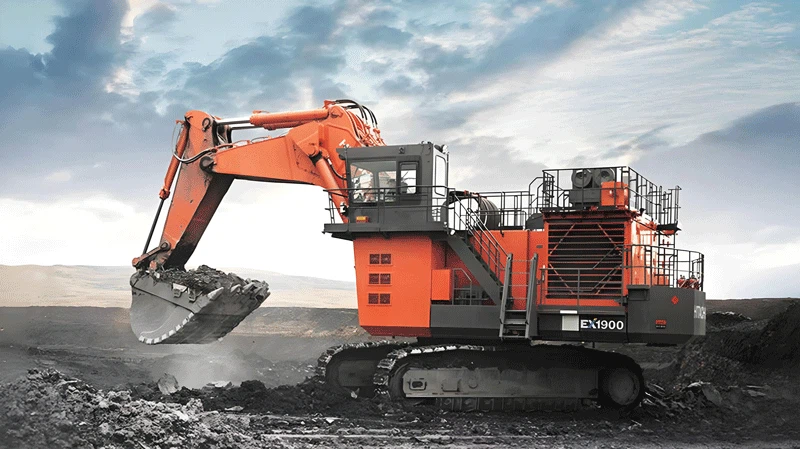
These machines are engineering marvels, designed for heavy - duty tasks in mining and large - scale construction projects. Their massive size and power allow them to move millions of tons of material efficiently.
how much to rent an excavator for a day
The cost to rent an excavator for a day can vary significantly based on the size and type of the machine. Here are some general daily rental rates:
Mini Excavators (1-6 tons)
Daily Rate: $150 - $400 per day.
Small Excavators (7-10 tons)
Daily Rate: $350 - $600 per day.
Medium Excavators (11-25 tons)
Daily Rate: $550 - $900 per day.
Large Excavators (26-45 tons)
Daily Rate: $800 - $1,500+ per day.

Specific Examples
1.5 Ton Excavator: $260 per day.
3.5 Ton Excavator: $400 per day.
5 Ton Excavator: $450 per day.
8.5 Ton Excavator: $550 per day.
These rates can vary based on regional differences, seasonal demand, and additional factors such as the inclusion of an operator or specific attachments. For the most accurate pricing, it is recommended to contact local rental companies or check online platforms like United Rentals.
how much is a temu excavator
According to the latest information from Temu, the prices of mini excavators vary based on the model and specifications. Here are some specific examples:
1. 1 Ton Mini Excavator:
Price: $4,051.41
Features: All - terrain tracks, canopy, adjustable seat, 13.5 HP EPA engine, suitable for park construction sites.
Brand: No specific brand mentioned.
Model: 1 Ton Mini Excavator.
Category: Mini Excavator.
2. 1 Ton Mini Excavator with Hydraulic Thumb:
Price: $191.89 (initial payment) with full price around $6,750
Features: Hydraulic thumb, 13.5 HP EPA engine, suitable for construction works and gardening.
Brand: No specific brand mentioned.
Model: MS10H.
Category: Mini Excavator.

3. 1 Ton Mini Digger with Enclosed Cab:
Price: $6,750.82
Features: Enclosed cab, hydraulic system, suitable for agricultural and construction use.
Brand: No specific brand mentioned.
Model: HY14D.
Category: Mini Excavator.
These prices and models are available on Temu, and they offer a range of features suitable for different applications. If you are interested in purchasing, it is recommended to visit the Temu website for more detailed information and current promotions.
how much does it cost to rent a excavator
The cost to rent an excavator can vary widely based on the size, type, and rental duration. Here are some general rental rates based on the latest information:
Daily Rental Rates
Mini Excavators (1-6 tons): $250 – $400 per day.
Small Excavators (7-10 tons): $350 – $600 per day.
Medium Excavators (11-25 tons): $550 – $900 per day.
Large Excavators (26-45 tons): $800 – $1,500+ per day.
Weekly Rental Rates
Mini Excavators: $750 – $1,200 per week.
Small Excavators: $1,050 – $1,800 per week.
Medium Excavators: $1,650 – $2,700 per week.
Large Excavators: $2,400 – $4,500+ per week.
Monthly Rental Rates
Mini Excavators: $2,000 – $3,200 per month.
Small Excavators: $2,800 – $4,800 per month.
Medium Excavators: $4,400 – $7,200 per month.
Large Excavators: $6,400 – $12,000+ per month.

Factors Affecting Rental Rates
Several factors can influence excavator rental rates:
Regional Variations: Rates in urban areas and regions with high construction activity typically run 15-25% higher than in rural areas.
Seasonal Demand: Rates during peak construction seasons (typically spring and summer) may be 10-20% higher than off-season rates.
Attachments: Additional attachments such as hammers, augers, or grapples typically add $50-$300 per day to the base rental rate.
Operator Inclusion: Rates for excavators with operators typically run 50-100% higher than equipment-only rentals.
For the most accurate and up - to - date pricing, it's recommended to contact local rental agencies or check online platforms like United Rentals or ACT Construction Equipment.


