

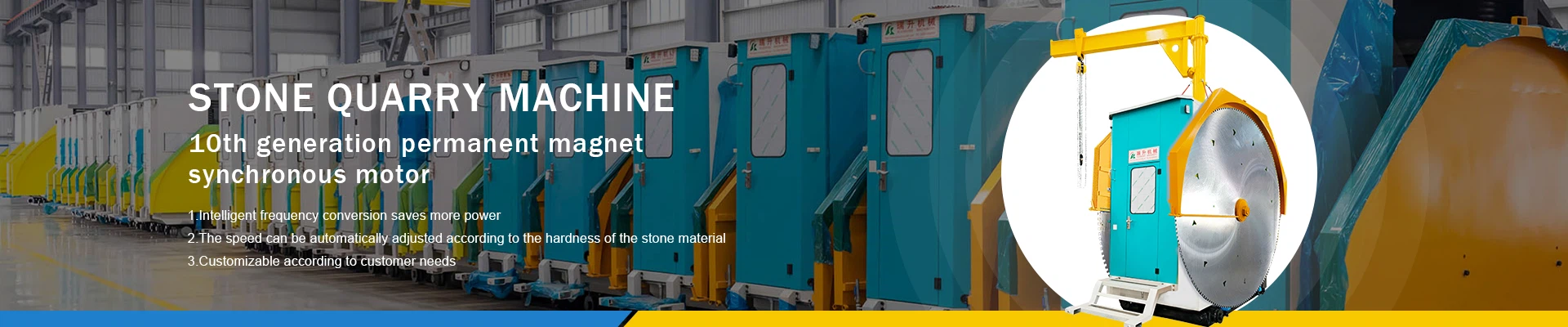
Mining operations require a variety of specialized machinery to extract and process minerals efficiently and safely. Here are some of the key machines used in the mining industry, including the Diamond Wire Saw Machine and Double Blade Mining Machine:
Excavators:
Overview: Excavators are heavy-duty machines used for digging and moving large amounts of earth and other materials. They are equipped with powerful hydraulic systems that operate the arm, bucket, and cab.
Functions: Excavators are primarily used for digging and removing overburden, transporting materials to dump trucks or conveyor belts, and directly extracting minerals and ores.

Drills:
Overview: Drills are essential for creating holes in the earth's surface for various purposes, including exploration, blasting, and extracting minerals.
Types: Common types include blast hole drills, rotary drills, and percussion drills.
Functions: Drills are used for exploration, creating holes for explosives, and extracting minerals directly from the rock.

Loaders:
Overview: Loaders are versatile machines used to load materials onto trucks, conveyor belts, or other equipment.
Functions: They transport and load materials such as soil, rock, and ore, create stockpiles, and clear debris.

Haul Trucks:
Overview: Haul trucks, also known as dump trucks, are used to transport large quantities of material from mining sites to processing plants or disposal areas.
Types: Articulated haul trucks and rigid haul trucks are common, with the former offering better maneuverability on rough terrain.
Functions: These trucks move extracted materials and waste rock, and are equipped with hydraulic systems for efficient dumping.

Conveyor Systems:
Overview: Conveyor systems transport materials over long distances within mining sites.
Functions: They move materials from excavation sites to processing plants, create stockpiles, and can be equipped with sorting mechanisms.

Crushers:
Overview: Crushers reduce the size of large rocks and stones, making them easier to process.
Types: Jaw crushers, cone crushers, and impact crushers are commonly used.
Functions: They prepare materials for secondary crushing or further processing.
Screening Equipment:
Overview: Screening equipment separates different sizes of materials to ensure consistency.
Types: Vibrating screens and trommel screens are used to sort materials.
Functions: They remove unwanted particles and ensure only properly sized materials proceed to the next stage of processing.
Diamond Wire Saw Machines:
Overview: Diamond wire saw machines use diamond-coated wires to cut through stone with precision and minimal waste.
Functions: These machines are ideal for cutting large stone blocks into slabs or other desired shapes.
Advantages: They offer high precision, reduced environmental impact, and lower operational costs compared to traditional methods.

Double Blade Mining Machines:
Overview: Double blade mining machines are designed for efficient and precise cutting of stone blocks.
Functions: These machines use two large saw blades to cut through stone, offering high efficiency and reduced waste.
Advantages: They provide stable performance, easy operation, and high cutting precision, making them suitable for granite, marble, and limestone quarries.

Conclusion
Modern mining operations rely on a combination of advanced machinery to efficiently extract and process minerals. Each machine plays a specific role in enhancing productivity, reducing environmental impact, and ensuring safety. The Diamond Wire Saw Machine and Double Blade Mining Machine are particularly effective for stone mining, offering high precision and efficiency.
What is the role of excavators in mining?
Excavators play a crucial role in mining operations, contributing significantly to efficiency, productivity, and safety. Here's a detailed look at their key functions:
1. Material Extraction
Excavators are designed to dig and remove large amounts of rock, soil, and minerals. Their powerful hydraulic systems enable them to break through tough rock formations, making the extraction of valuable minerals and stones more efficient. This is particularly important in open-pit mining, where large volumes of material need to be removed to access the ore.
2. Loading and Hauling
Once the material is extracted, excavators can load it onto trucks or conveyors for transportation. Their large buckets and strong arms allow for quick and efficient loading, reducing downtime and increasing overall productivity. This is essential for maintaining a steady flow of material from the mine to processing facilities.
3. Grading and Site Preparation
Excavators are used to grade and level the mining site, preparing it for further operations. This includes creating access roads, setting up working platforms, and ensuring the site is safe and stable for other machinery and workers. Proper grading helps prevent erosion and ensures that heavy equipment can move safely and efficiently.
4. Benching and Contouring
In mining, excavators are used to create benches (horizontal levels) and contours on the mine face. This helps in the systematic extraction of material and ensures that the mine is developed in a controlled and safe manner. Benching is crucial for preventing rockslides and ensuring the stability of the mine walls.
5. Demolition and Clearing
Excavators equipped with specialized attachments like hydraulic breakers can be used for demolition tasks, such as breaking down large rock boulders or clearing debris. This helps in maintaining a clean and organized work area, reducing the risk of accidents and improving overall efficiency.
6. Safety and Precision
Modern excavators come with advanced features like GPS-guided systems and remote control capabilities, which enhance precision and safety. Operators can work from a safe distance, reducing the risk of accidents in the hazardous mining environment. These technologies also help in achieving more accurate and consistent results.
7. Versatility
Excavators are highly versatile machines that can be fitted with various attachments to perform multiple tasks. For example, they can be equipped with buckets for digging, breakers for breaking rock, and grapples for handling large boulders. This versatility makes them an essential tool in mining operations.
8. Environmental Impact
By efficiently removing and processing materials, excavators help minimize the environmental impact of mining. They can be used to reclaim and restore mined areas, reducing the overall footprint of mining operations.
Conclusion
Excavators are indispensable in mining operations, providing essential functions that enhance efficiency, safety, and productivity. Their versatility and advanced features make them a valuable asset in both large-scale and small-scale mining projects.
What are some common attachments used with excavators in mining?
In mining operations, excavators are equipped with a variety of attachments to enhance their functionality and efficiency. Here are some of the most common attachments used:
1. Buckets
General Purpose Bucket: Used for most digging tasks involving loose materials like dirt, gravel, or sand.
Heavy Duty Bucket: Reinforced with thicker steel, ideal for tougher materials such as compacted soil or clay.
Rock Bucket: Features thicker teeth and a more durable frame, suitable for handling rocks and other abrasive materials.
Skeleton Bucket: Has a grid-like structure to sift materials, allowing smaller particles to fall through while retaining larger ones.
2. Hydraulic Breakers (Hammers)
Used for breaking hard materials like rock or concrete. They deliver powerful impact force and are invaluable in demolition and mining tasks.
3. Augers
Ideal for drilling precise holes in various soil conditions. Commonly used for fence installation, tree planting, and pole-setting.
4. Grapples
Rotating Grapple: Rotates 360 degrees, perfect for grabbing, holding, and rotating materials in demolition, construction, or recycling tasks.
Log Grapple: Designed for forestry work, securing large logs for transport and processing.
Demolition Grapple: Reinforced with heavy-duty steel, used for safely grabbing and breaking apart structures.
5. Rippers
Used for breaking through tough ground, such as hard soil, frozen earth, or asphalt. They help loosen the ground before excavation.
6. Hydraulic Thumbs
Improve the excavator's ability to grab and control objects, working alongside buckets or grapples to lift and transport irregular materials.
7. Quick Couplers
Allow for quick and easy attachment changes, increasing the versatility and efficiency of the excavator.
8. Crusher Attachments
Allow for on-site processing of materials like concrete, stone, and asphalt. They help reduce waste and disposal costs by recycling materials.
9. Mulcher Attachments
Used for land clearing and vegetation management, shredding small trees and thick brush.
10. Compactor Attachments
Help press soil, gravel, and asphalt into a firm base, important for road construction and foundation preparation.
These attachments significantly enhance the capabilities of excavators in mining operations, making them more versatile and efficient for various tasks.
How do drills help in mineral extraction?
Drills are essential in mineral extraction, primarily used for creating holes in rock formations. These holes are crucial for inserting explosives in blasting operations, which break down large rock formations into smaller, manageable pieces for excavation. Drills also extract core samples, providing valuable geological data on the type, quality, and extent of mineral deposits. This information is vital for planning and assessing the economic feasibility of mining projects. Additionally, drills create tunnels and shafts in underground mining, facilitating access, ventilation, and support structures. Modern drills, equipped with advanced technologies, offer high precision, efficiency, and real-time monitoring, enhancing safety and reducing environmental impact.

How do advanced drills improve mining safety?
Advanced drills significantly enhance mining safety through several key innovations. Firstly, automated drilling rigs perform complex tasks with high precision, minimizing human error and reducing the risk of accidents. Real-time monitoring and analytics allow for continuous oversight of drilling operations, enabling early detection of potential hazards and preventing accidents. Additionally, remote operation technologies, such as robotic drilling rigs and UAVs, keep workers out of hazardous areas, further enhancing safety. These advancements not only streamline operations but also create a safer working environment by reducing exposure to dangerous conditions and minimizing the need for manual intervention in high-risk areas.
What are the safety measures for using mining machines?
Using mining machines safely requires a comprehensive approach that includes risk assessment, proper training, adherence to safety protocols, and the use of appropriate equipment. Here are some key safety measures for using mining machines:
1. Comprehensive Risk Assessments
Conduct thorough risk assessments to identify potential hazards such as rockfalls, gas leaks, and equipment malfunctions. Regular assessments help operators stay proactive and adjust safety protocols as needed.
2. Regular Safety Training
Continuous training is crucial for equipping workers with the knowledge and skills necessary to navigate hazards safely. Training should cover emergency procedures, proper equipment usage, and awareness of environmental risks. Regular safety drills simulate real-life scenarios, ensuring workers are prepared for emergencies.
3. Use of Personal Protective Equipment (PPE)
Ensure that workers wear appropriate PPE at all times, including hard hats, gloves, masks, and protective clothing. PPE serves as a frontline defense against workplace hazards.
4. Implementing Safe Work Practices
Establish and enforce safe work practices, including protocols for equipment operation, material handling, and emergency response. For example, lockout/tagout procedures ensure that machinery is properly shut down during maintenance.
5. Emergency Preparedness and Response
Mining sites must have clear emergency protocols, including evacuation plans, communication systems, and medical response strategies. Regular drills can help ensure that workers know their roles in an emergency.
6. Pre-Shift Inspections
Before each shift begins, conduct thorough inspections of equipment and work areas to identify hazards such as loose rocks, gas leaks, or faulty machinery.
7. Ventilation and Air Quality Control
Proper ventilation is essential to regulate air quality and reduce exposure to toxic gases like methane and carbon monoxide. Mines should employ advanced ventilation systems and regular gas checks.
8. Traffic Management Plans
Establish traffic management protocols to regulate the movement of large vehicles and mobile equipment within mining sites. Clear signage, designated pathways, and speed limits reduce the risk of vehicle collisions.
9. Dust Control Measures
Implement dust control measures such as wet drilling techniques, dust suppressants, and air filtration systems to minimize respiratory risks.
10. Equipment Lockout/Tagout (LOTO)
Follow lockout/tagout procedures to ensure machinery is safely deactivated and cannot be accidentally restarted during maintenance.
11. Safe Explosive Handling and Storage
Handle and store explosive materials with extreme caution, following strict protocols to prevent accidental detonation.
12. Worksite and Equipment Housekeeping
Maintain a clean and organized worksite to minimize hazards. Proper storage and regular maintenance of tools and machinery are critical to prevent malfunction and accidents.
13. Monitoring and Reporting System
Implement systems that monitor worksite conditions and encourage miners to report unsafe conditions or incidents immediately.
14. Fatigue Management and Shift Scheduling
Manage fatigue through scheduled breaks, shift durations, and task rotation to prevent exhaustion-related accidents.
15. Regular Safety Audits and Compliance Checks
Conduct periodic safety audits to assess compliance with safety standards and identify areas for improvement.
By adhering to these safety measures, mining operations can significantly reduce risks and protect workers from hazards inherent in mining activities.
How does the Diamond Wire Saw Machine work?
Diamond wire saw machines work by using a high-tensile steel wire embedded with diamond particles to cut through hard materials. The wire is driven by a motor, which powers pulleys to move the wire at high speeds (typically 10–15 m/s). The diamond particles act as abrasives, grinding and cutting the material as the wire moves through it. A cooling system injects water or coolant to manage heat and remove debris, ensuring smooth operation and prolonging the wire's life. These machines are highly precise, versatile, and efficient, making them ideal for cutting materials like stone, concrete, metal, and silicon wafers. Their ability to produce clean cuts with minimal material loss and low dust emission enhances both productivity and safety.

Can you explain the role of Double Blade Mining Machine in detail?
The Double Blade Mining Machine is a specialized piece of equipment designed for efficient and precise rock extraction in quarries. Here's a detailed explanation of its role and features:
Key Features and Advantages
Dual-Blade System:
The machine uses two cutting blades, which significantly increase the cutting efficiency and precision. This dual-blade system allows for a wider range of cutting and more precise extraction, ensuring higher productivity.
All-Wheel-Drive Mechanism:
Equipped with an all-wheel-drive walking mechanism, the machine offers excellent traction and mobility, making it capable of navigating through tough terrains with ease.
Hydraulic and Mechanical Systems:
The machine integrates mechanical, hydraulic, and electrical systems, providing a high degree of automation and ease of operation. The hydraulic elevator and cylindrical guide rail ensure stability and precision during cutting.
Enhanced Durability:
The fully sealed cylindrical guide rail and original lubrication system protect the machine from contamination, increasing its service life and reducing maintenance costs.
Environmental and Safety Benefits:
The double blade mining machine is more environmentally friendly compared to traditional blasting methods. It reduces dust and smoke pollution, making the mining process safer and more sustainable.
Increased Productivity:
The machine is designed to work efficiently, allowing for faster cutting and higher output. This leads to increased productivity and reduced labor costs.
Applications
Granite, Marble, and Sandstone Quarries: The double blade mining machine is particularly effective in extracting high-quality blocks of granite, marble, and sandstone. It can handle ultra-large rocks and blocks, improving the overall yield and utilization of mineral resources.
Versatile Cutting: The machine can be used for a wide range of applications, including cutting, drilling, and shaping stone. Its versatility makes it a valuable tool for various quarry operations.
Conclusion
The Double Blade Mining Machine offers significant benefits in terms of efficiency, precision, and environmental impact. Its advanced features and robust design make it a reliable choice for modern quarry operations, enhancing productivity and sustainability.


