

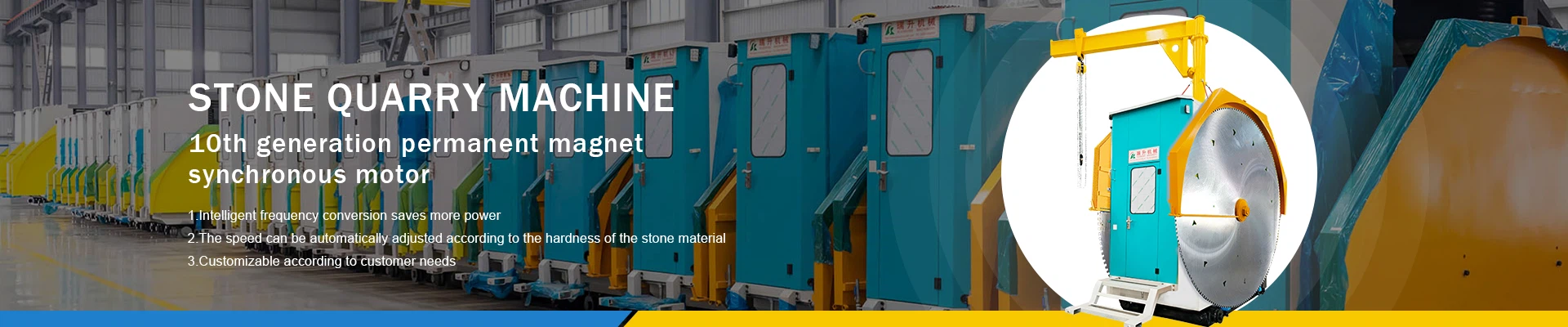
In a quarry, various machines are used to extract, process, and transport stone and other materials. Here are some of the key machines and their roles:
1. Excavators
Role: Excavators are used for digging and loading materials such as stone, soil, and debris. They are essential for removing overburden and extracting stone blocks.
Types: Common types include hydraulic excavators and backhoe loaders.
2. Bulldozers
Role: Bulldozers are used for grading and leveling the ground, as well as for pushing and moving large amounts of material.
Types: Track-type bulldozers are common in quarries for their stability and traction.
3. Loaders
Role: Loaders are used for loading and transporting materials from the quarry face to processing areas or trucks.
Types: Wheel loaders and skid steer loaders are commonly used for their versatility and maneuverability.
4. Drilling Machines
Role: Drilling machines create holes for blasting or for inserting diamond wire saws. They are crucial for precision cutting and breaking of stone.
Types: Rotary drills, DTH (Down-The-Hole) drills, and diamond core drills are used depending on the application.
5. Diamond Wire Saws
Role: Diamond wire saws are used for cutting large stone blocks into smaller, more manageable pieces. They offer high precision and efficiency.
Types: Single-wire and multi-wire saws are available, with the latter being more efficient for large-scale operations.
6. Crushing Machines
Role: Crushing machines reduce the size of stone blocks into smaller aggregates suitable for various applications.
Types: Jaw crushers, cone crushers, and impact crushers are commonly used.
7. Screening Machines
Role: Screening machines separate different sizes of stone and aggregate, ensuring uniformity and quality.
Types: Vibrating screens and trommel screens are used to sort materials by size.
8. Conveyor Belts
Role: Conveyor belts transport materials from the quarry face to processing areas or stockpiles, reducing manual labor and increasing efficiency.
Types: Portable and fixed conveyor systems are used depending on the layout and needs of the quarry.
9. Sorting Machines
Role: Sorting machines are used to sort and classify stone and aggregate based on size and quality.
Types: Automated sorting machines and manual sorting stations are used to ensure high-quality output.
10. Water Trucks
Role: Water trucks are used to control dust and maintain a clean working environment.
Types: Various sizes of water trucks are available, equipped with sprinkler systems for dust suppression.
Conclusion
Quarry operations rely on a combination of heavy machinery to efficiently extract, process, and transport materials. Each machine plays a specific role in the overall process, ensuring high productivity and quality output.
How do drilling machines work in a quarry?
Drilling machines in quarries are essential for creating holes in rock formations to prepare for blasting and extraction. Here's how they typically work and their key principles:
Working Principles
Drifters (Top Hammer Drills):
These drills use a piston mechanism to drive a hammer into the rock. The piston is powered by compressed air or hydraulic fluid.
The drill bit is attached to a series of drill rods that transmit the impact force to the rock.
Compressed air or a combination of air and water/foam is used to flush out drill cuttings.
Down-the-Hole (DTH) Drills:
DTH drills use a hammer mechanism located at the bottom of the drill hole, providing direct and powerful impacts to the rock.
This type of drill is highly effective for hard rock formations and deep drilling projects.
Rotary Drills:
Rotary drills use a rotating drill bit to penetrate the rock. They are efficient for drilling deep and precise holes.
These drills are versatile and can handle various rock types.
Operation Process
Preparation:
Conduct a detailed survey of the quarry face to determine the best locations for drilling holes.
Design the drill pattern based on factors like rock hardness, desired fragmentation, and safety considerations.
Drilling:
Drifters and DTH drills are commonly used to create holes according to the designed pattern.
Operators must follow the planned pattern precisely to ensure effective blasting.
Blasting:
Once the holes are drilled, explosives are inserted and detonated to fragment the rock.
The resulting rock fragments are then removed and transported for further processing.
Safety and Efficiency
Safety Guidelines:
Operators should be trained to follow safety protocols and use appropriate personal protective equipment.
Regular maintenance of drilling equipment is crucial to prevent accidents and ensure accurate drilling.
Efficiency:
Modern drilling machines are equipped with advanced systems like Hole Navigation Systems (HNS) to ensure precise drilling and adherence to the planned pattern.
Efficient drilling reduces the need for secondary breaking and minimizes environmental impact.
By following these principles and guidelines, drilling machines in quarries can operate safely and efficiently, contributing to the effective extraction of valuable stone materials.

What are the common safety hazards in quarry drilling?
Quarry drilling operations involve a range of safety hazards that require careful management to ensure the well-being of workers and the environment. Here are some of the most common safety hazards:
Equipment Malfunctions:
Mechanical Failures: Drilling equipment can malfunction due to wear and tear, leading to unexpected downtime or dangerous situations.
Moving Parts: Rotating machinery and conveyor belts pose a risk of entanglement.
Falling Objects:
Material Handling: Materials being transported can fall and injure workers.
Rockfall: During blasting and drilling, rock fragments can become falling objects.
Chemical and Toxic Exposure:
Hazardous Substances: Drilling fluids and chemicals can cause skin irritations and respiratory issues.
Hydrogen Sulfide: Encountering H2S-bearing zones can pose significant health risks due to the toxic nature of hydrogen sulfide.
Noise and Vibration:
Noise-Induced Hearing Loss: Drilling operations generate high noise levels, risking hearing damage.
Vibration: Prolonged exposure to vibration can lead to musculoskeletal issues.
Slips, Trips, and Falls:
Uneven Terrain: Quarry environments often have rugged terrain, increasing the risk of slips and falls.
Slippery Surfaces: Wet or oily surfaces can lead to accidents.
Fire and Explosion Risks:
Flammable Materials: The presence of fuel, lubricants, and hydraulic fluids increases the risk of fires and explosions.
Environmental Hazards:
Soil Erosion: Drilling activities can lead to soil erosion and water contamination.
Biodiversity Loss: Operations in sensitive environments can impact local flora and fauna.
Mitigation Measures
Regular Maintenance: Ensure equipment is regularly inspected and maintained to prevent malfunctions.
Personal Protective Equipment (PPE): Provide and enforce the use of PPE, including hearing protection and safety harnesses.
Safety Training: Conduct comprehensive training for operators and workers to recognize and mitigate hazards.
Environmental Protocols: Implement measures to manage waste and prevent contamination.
By addressing these hazards through proactive management and adherence to safety protocols, quarry drilling operations can be made safer for workers and the environment.

Can you explain the role of water in drilling processes?
Water plays a vital role in drilling processes. It cools and lubricates the drill bit, reducing heat and wear. Water also helps remove drill cuttings from the hole, maintaining drilling efficiency and preventing blockages. Additionally, it stabilizes the borehole by maintaining pressure, preventing collapse. Water is environmentally friendly compared to other drilling fluids, posing minimal risk to the environment. It is also cost-effective and widely available. Overall, water enhances drilling efficiency, protects equipment, and supports safe and sustainable drilling operations.

Can you explain the role of conveyor belts in quarry operations?
Conveyor belts are essential in quarry operations for efficiently transporting materials like stone, gravel, and sand. They move materials from the quarry face to processing areas or stockpiles, reducing manual labor and increasing productivity. Conveyor belts ensure a steady supply of materials to crushers and screens, maintaining consistent production rates. They are cost-effective, energy-efficient, and can be customized to fit specific quarry layouts. Enclosed systems also help control dust, reducing environmental impact. Overall, conveyor belts enhance efficiency, safety, and reliability in quarry operations.
How do excavators differ from backhoes?
Excavators and backhoes are both heavy construction machines, but they have key differences in design, size, and functionality. Excavators are larger, more powerful, and feature a long boom arm with a 360-degree rotating cab. They are built for heavy-duty tasks like deep digging, trenching, and demolition, with digging depths often exceeding 18 feet. Their tracked undercarriage provides stability on rough terrain.
Backhoes, on the other hand, are more compact and versatile, combining a front loader with a rear digging arm. They are ideal for smaller projects, with digging depths typically up to 14–16 feet. Backhoes are wheeled, making them easier to maneuver in tight spaces and on urban roads. They are also more affordable and fuel-efficient, making them suitable for short-term tasks and smaller projects.
In summary, excavators are best for large-scale, heavy-duty projects, while backhoes are perfect for smaller, more versatile tasks in tight spaces.
Can you explain the function of a diamond wire saw?
A diamond wire saw is a precision cutting tool that uses a high-tensile steel wire embedded with diamond abrasive particles to slice through hard materials like stone, concrete, and silicon. The wire moves at high speeds (10-15 m/s) while the workpiece is fed into it, enabling precision cutting with minimal kerf loss.
Key Components
Diamond-Embedded Wire: The wire is coated with synthetic diamond grit (30-100 µm in size) using electroplating or resin bonding. These diamonds provide the cutting power and allow the wire to cut through hard materials.
Wire Guidance System: Ensures consistent tension (20-60 N) and alignment, maintaining the wire's trajectory.
Coolant System: Prevents overheating and removes debris, typically using PEG-based or water-soluble coolants.
Motion Control System: Controls wire speed, feed rate, and cutting angle.
Cutting Process
Wire Movement: The diamond wire runs in a continuous loop, driven by motorized pulleys.
Cutting Mechanism: The diamond particles grind through materials via micro-cutting and brittle fracture.
Coolant Application: A steady flow of coolant lubricates the cut, reduces thermal stress, and flushes away debris.
Material Separation: The material is sliced into precise thicknesses (e.g., 180 µm for solar wafers).
Advantages
Higher Cutting Speed and Efficiency: Up to 1.5x faster than slurry-based methods, with multi-wire configurations allowing simultaneous cutting of hundreds of wafers.
Reduced Kerf Loss and Material Waste: Kerf width as low as 120-150 µm, increasing yield per ingot.
Improved Surface Quality: Lower subsurface damage, reduced wire marks, and waviness.
Environmental and Cost Benefits: No slurry disposal issues, longer wire lifespan (up to 1,000 cuts per wire).
Diamond wire saws are essential in industries requiring precision cutting of hard materials, such as construction, stone quarries, manufacturing, and electronics.

Can you explain the difference between diamond wire saws and other cutting tools?
Diamond wire saws and other cutting tools like traditional wire saws, laser cutting, and mechanical saws each have unique characteristics and applications. Here's a detailed comparison based on recent industry practices and specific information from the search results:
Diamond Wire Saws vs. Traditional Wire Saws
Cutting Efficiency:
Diamond Wire Saws: Offer higher cutting efficiency and precision, especially for hard materials like granite, marble, and reinforced concrete.
Traditional Wire Saws: Suitable for softer materials but may struggle with harder substances.
Precision and Finish:
Diamond Wire Saws: Provide superior precision and a smoother finish, resulting in cleaner cuts with minimal damage to the material.
Traditional Wire Saws: May leave rougher edges and require additional finishing processes.
Material Suitability:
Diamond Wire Saws: Ideal for cutting hard materials such as stone, metal, glass, and ceramics.
Traditional Wire Saws: More versatile but less effective on very hard materials.
Cost and Maintenance:
Diamond Wire Saws: Generally more expensive upfront but offer long-term cost savings due to durability and reduced maintenance.
Traditional Wire Saws: Lower initial cost but may require more frequent maintenance and wire replacements.
Diamond Wire Saws vs. Laser Cutting
Cutting Method:
Diamond Wire Saws: Use a diamond-coated wire to grind through materials.
Laser Cutting: Uses a focused laser beam to melt, vaporize, or burn through materials.
Precision and Accuracy:
Diamond Wire Saws: Excellent for intricate and detailed cuts, especially on hard materials.
Laser Cutting: Highly accurate, particularly for thin materials and smooth edges.
Cutting Speed:
Diamond Wire Saws: Generally slower but ideal for detailed and complex cuts.
Laser Cutting: Faster, making it suitable for high-volume production.
Material Suitability:
Diamond Wire Saws: Best for hard materials like steel, titanium, and ceramics.
Laser Cutting: Versatile for a wide range of materials, including plastics, wood, and acrylic.
Edge Quality:
Diamond Wire Saws: May leave a rougher edge that requires additional finishing.
Laser Cutting: Provides clean, smooth edges, reducing the need for further processing.
Conclusion
The choice between diamond wire saws and other cutting tools depends on the specific requirements of your project. Diamond wire saws offer unmatched precision and efficiency for cutting hard materials, making them ideal for industries like stone quarrying, construction, and electronics.Laser cutting, on the other hand, excels in speed and versatility, making it suitable for high-volume production and a wide range of materials.Understanding these differences helps in selecting the right cutting solution for your needs.

What are the environmental benefits of using diamond wire saws?
Diamond wire saws offer several environmental benefits compared to traditional cutting methods:
Minimizing Material Waste: Diamond wire saws are highly precise, resulting in minimal material waste. This precision means less material is wasted during the cutting process, contributing to more efficient resource utilization.
Enhanced Energy Efficiency: These saws require less power due to reduced friction and heat generation, leading to lower electricity consumption and a smaller carbon footprint.
Reducing Emissions and Pollution: The cutting process produces significantly less dust compared to traditional methods, and the enclosed cutting technique helps contain dust, reducing environmental contamination.
Sustainability of Materials: Diamond wire saws often use synthetic diamonds, which have a lower environmental impact compared to mined diamonds. Additionally, the longevity of these saws means they require less frequent replacement.
Use of Environmentally Friendly Coolants: These saws generally use water-based coolants instead of oil-based ones, reducing the use and emission of harmful substances.
Recycling and Resource Conservation: Waste materials, such as silicon powder, can be recycled, reducing the need for virgin materials and decreasing environmental impact.
These benefits make diamond wire saws a more sustainable choice for industries like stone quarrying and silicon wafer production.
What is the purpose of a vibrating screen?
A vibrating screen is a key piece of equipment used to separate materials by size. It efficiently sorts large volumes of materials like rocks, sand, and gravel in quarries and mines. The screen vibrates, allowing smaller particles to pass through while larger ones stay on top. This ensures consistency in final products and prepares materials for further processing, such as crushing or blending. Vibrating screens also reduce manual labor, lower costs, and minimize worker injuries. They can be customized with different mesh sizes and are suitable for various industries, including construction and recycling. Modern screens often include dust control and noise reduction features, making them environmentally friendly. Overall, vibrating screens enhance productivity, maintain quality, and offer versatility in material handling.
How do excavators help in quarry operations?
Excavators play a crucial role in quarry operations, contributing significantly to efficiency and productivity. Here's how they help:
Material Extraction: Excavators are designed to dig and remove large amounts of rock and soil. Their powerful hydraulic systems enable them to break through tough rock formations, making the extraction of valuable minerals and stones more efficient.
Loading and Hauling: Once the material is extracted, excavators can load it onto trucks or conveyors for transportation. Their large buckets and strong arms allow for quick and efficient loading, reducing downtime and increasing overall productivity.
Grading and Site Preparation: Excavators are used to grade and level the quarry site, preparing it for further operations. This includes creating access roads, setting up working platforms, and ensuring the site is safe and stable for other machinery and workers.
Benching and Contouring: In quarries, excavators are used to create benches (horizontal levels) and contours on the quarry face. This helps in the systematic extraction of material and ensures that the quarry is developed in a controlled and safe manner.
Demolition and Clearing: Excavators equipped with specialized attachments like hydraulic breakers can be used for demolition tasks, such as breaking down large rock boulders or clearing debris. This helps in maintaining a clean and organized work area.
Safety and Precision: Modern excavators come with advanced features like GPS-guided systems and remote control capabilities, which enhance
precision and safety. Operators can work from a safe distance, reducing the risk of accidents in the hazardous quarry environment.
Overall, excavators are versatile machines that enhance the efficiency, safety, and productivity of quarry operations.
What are the maintenance tips for excavators?
Here are some essential maintenance tips for excavators to keep them running smoothly and efficiently:
Daily Maintenance Checks
Check Fluid Levels: Ensure that engine oil, hydraulic fluid, and coolant are at the correct levels. This prevents internal damage and ensures smooth operation.
Inspect for Leaks: Look for oil, hydraulic fluid, or coolant leaks. Early detection can prevent costly repairs.
Clean the Undercarriage: Remove debris and dirt buildup to prevent wear and ensure proper movement.
Check Tracks and Rollers: Ensure proper tension and inspect for wear on tracks, rollers, and idlers.
Inspect Filters: Clean or replace air, hydraulic, and fuel filters to maintain system efficiency.
Test Safety Devices: Ensure that lights, signals, alarms, and safety controls are functioning properly.
Grease Key Points: Lubricate pivot points, joints, and bearings to reduce friction and wear.
Periodic Maintenance Tasks
Fluid Changes: Regularly change engine oil, hydraulic fluid, and coolant according to the manufacturer's schedule. This helps prevent contamination and overheating.
Replace Worn Parts: Check and replace wear parts like bucket teeth and cutting edges to maintain digging efficiency.
Inspect Belts and Hoses: Look for cracks or wear and replace them if necessary to prevent breakdowns.
Clean the Cooling System: Remove dirt and debris from the radiator and other cooling components to ensure proper heat dissipation.
General Maintenance Practices
Follow the Manufacturer's Schedule: Adhere to the recommended maintenance intervals to ensure optimal performance and prevent unexpected failures.
Use High-Quality Parts and Fluids: Invest in genuine and high-quality components to enhance durability and efficiency.
Train Operators: Ensure that operators are trained in proper operating techniques to reduce strain on the machine.
Store Properly: When not in use, store the excavator in a dry, covered area to protect it from harsh weather and prevent rust.
By following these maintenance tips, you can extend the lifespan of your excavator, reduce downtime, and ensure it operates efficiently.


