

The first excavator was invented in 1835 by William Otis.His steam-powered excavator, known as a steam shovel, was specifically designed to aid in the construction of the Western Railroad in Massachusetts.This invention marked a significant advancement in excavation technology, making large-scale projects like railway construction more feasible.
However, the concept of using hydraulic technology in excavators emerged later. The first hydraulic excavator was developed by Sir W.G. Armstrong & Company in England in 1882.This machine used water instead of hydraulic fluid to power its operations.
The transition to fully hydraulic systems continued into the 20th century. In 1951, the French company Poclain introduced the TY45, one of the first fully hydraulic excavators.This innovation allowed for smoother and more precise movements, significantly improving the efficiency and control of excavators.
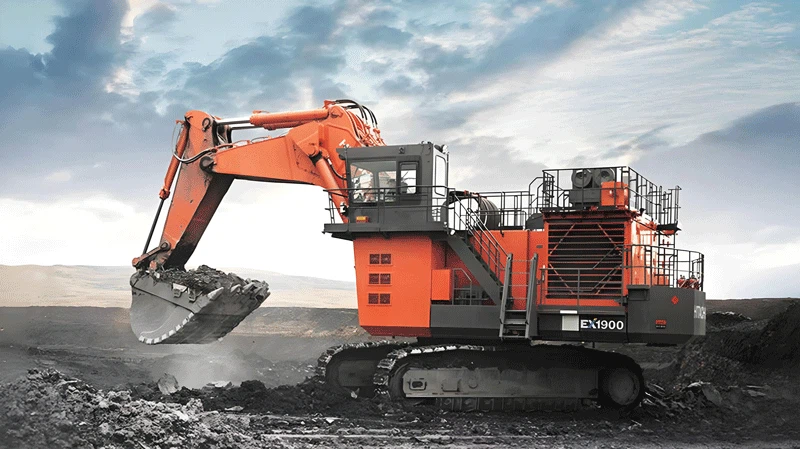
In summary, while the first excavator was invented in the mid-19th century, the development of hydraulic technology in the 20th century revolutionized the industry and led to the modern excavators we see today.
How did hydraulic technology change excavator operations
Hydraulic technology has revolutionized excavator operations in several significant ways, enhancing efficiency, precision, and overall performance. Here are the key impacts and advancements:
1. Enhanced Precision and Control
Hydraulic systems allow for precise control over the excavator's movements. Modern excavators use advanced hydraulic circuits that optimize the flow and pressure of hydraulic fluid, enabling smoother and more efficient movement and control of the excavator arm. This precision is further enhanced by the integration of electronic controls, which allow operators to perform delicate operations or move heavy loads with greater accuracy.
2. Increased Efficiency and Fuel Economy
Advanced hydraulic systems minimize energy wastage, enhance fuel efficiency, and reduce operational costs. For example, Volvo's electric-over-hydraulic system offers up to 15% better fuel efficiency compared to previous models. This system uses intelligent technology to manage hydraulic flow on demand, resulting in improved productivity and reduced fuel consumption.
3. Higher Digging and Lifting Power
Modern excavators feature hydraulic systems that can manage higher flow rates, improving speed and efficiency in digging and lifting operations. Additionally, innovations like dual-pump systems and advanced circuit designs deliver higher power output without compromising efficiency.
4. Reduced Vibration and Noise
Technological advancements in hydraulic breaker hammers, such as flexible mounting systems and optimized hydraulic flow control, have significantly reduced vibrations and noise during operation. This not only protects the machine and the operator but also minimizes the impact on surrounding areas.
5. Advanced Safety Features
Hydraulic systems incorporate safety features such as anti-rupture valves, which prevent uncontrolled cylinder movement in the event of a hose rupture. This significantly reduces the risk of accidents and damage.
6. Integration with Digital Technologies
The integration of GPS and sensor-based monitoring systems provides real-time data on machine performance, arm position, and operational metrics. This technology allows for precise control over digging depth and angle, reducing human error and enhancing safety on the job site.
7. Customizable Work Modes
Modern excavators offer customizable work modes that allow operators to tailor hydraulic response to specific tasks, from heavy lifting to fine grading. This flexibility enhances productivity and operator satisfaction.
8. Reduced Environmental Impact
Switching to biodegradable hydraulic fluids and adopting eco-friendly technologies have minimized the environmental impact of excavator operations while maintaining high performance.

Conclusion
Hydraulic technology has transformed excavator operations by offering enhanced precision, increased efficiency, higher power output, reduced vibrations, advanced safety features, and integration with digital technologies. These advancements have not only improved the performance and versatility of excavators but also contributed to more sustainable and efficient construction practices.
where are hitachi excavators made
Hitachi excavators are manufactured in several locations around the world. Here are the key manufacturing sites:
Japan:
Hitachinaka-Rinko Works: Located in Hitachinaka, Ibaraki Prefecture, this facility is responsible for producing ultra-large hydraulic excavators and rigid dump trucks. It is also the primary production site for large machinery spare parts and after-sales service.
Europe:
Amsterdam, The Netherlands: The Hitachi Construction Machinery (Europe) NV (HCME) facility in Amsterdam is known for producing medium-sized excavators. This site also integrates advanced machine control solutions from Leica Geosystems into its Zaxis-7 excavators.
Indonesia:
Cibitung, West Java: PT Hitachi Construction Machinery Indonesia is a major production base for medium-sized hydraulic excavators. It has recently expanded to begin mass production of the EX1200 ultra-large hydraulic excavator starting from November 2024. This site also manufactures front structures (booms, arms, and buckets) for ultra-large hydraulic excavators and other welded structures for mining machinery.
India:
Tata Hitachi Construction Machinery: This joint venture operates two manufacturing plants in India. The Dharwad facility in Karnataka produces excavators ranging from 2 to 20 tonnes, while the Kharagpur facility in West Bengal handles larger excavators from 20 to 120 tonnes.

These manufacturing sites reflect Hitachi's global production strategy, which aims to meet the diverse needs of customers around the world while leveraging local market conditions and expertise.
where are kubota excavators made
Kubota excavators are manufactured in several locations around the world, with Japan being a primary production site. Here are the key manufacturing locations for Kubota excavators:
Japan
Osaka, Sakai, Hirakata, Tsukuba, Utsunomiya, Shiga: These locations in Japan are known for producing a wide range of Kubota products, including compact tractors, sub-compact tractors, engines, construction equipment, implements, combines, and rice transplanters. All of Kubota's excavators are still produced at their manufacturing facilities in Japan.
Germany
Zweibrücken: Kubota Baumaschinen GmbH in Zweibrücken, Germany, specializes in the production of mini excavators and compact excavators. This facility caters to the European construction equipment market. Kubota plans to increase its production capacity of mini excavators in Germany by approximately 40% by 2028. Production will begin in phases in 2026.
China
Wuxi: Wuxi Kubota Construction Machinery Co., Ltd. manufactures mini excavators and components for other construction equipment. This facility allows Kubota to tap into China's vast manufacturing capabilities and serve the growing demand for construction equipment in the region.
United States
Gainesville, Georgia; Jefferson, Georgia: These locations in the United States produce a significant portion of Kubota's compact, sub-compact, and utility tractors sold in North America.

Other Locations
Thailand: Siam Kubota Corporation produces agricultural tractors primarily for Asian markets, diesel engines, combine harvesters, and rice transplanters.
France: Kubota Europe S.A.S. in Argenteuil primarily handles sales, marketing, and distribution in Europe, with some final assembly of compact tractors.
Canada: The facility in Pickering, Ontario, serves as a major distribution center for Kubota products across Canada, with some assembly of implements and attachments.
India: Mahindra Kubota India Pvt. Ltd. produces agricultural tractors through a joint venture with Mahindra & Mahindra.
Vietnam: Kubota Vietnam Co., Ltd. produces agricultural tractors, combine harvesters, and rice transplanters.
In summary, while Japan remains a key production site for Kubota excavators, the company has expanded its manufacturing footprint to include facilities in Germany, China, the United States, and other regions to meet global demand.
when were excavators invented
The first excavators were steam-powered machines developed in the 19th century. Here are some key milestones in the history of excavators:
Early Development
Steam Shovels: The first steam shovel was patented by William Otis in 1839. These machines were primarily used for railroad construction and large-scale excavation projects.
Transition to Hydraulic Systems
Hydraulic Excavators: The first hydraulic excavator was developed in Italy in 1947. In 1965, Hitachi released the UH03, the first hydraulic excavator based entirely on Japanese technology.
Modern Innovations
Hybrid and Electric Models: Modern excavators have evolved to include hybrid systems that combine diesel engines with electric motors for reduced fuel consumption and lower emissions. Fully electric models, such as the Volvo ECR25 Electric, provide zero-emission operation, ideal for urban and environmentally sensitive areas.

The development of excavators has significantly transformed construction and mining operations, making them more efficient and versatile over time.
where are case excavators made
CASE Construction Equipment is a global manufacturer of construction machinery, and its excavators are produced in several locations around the world. Here are the key manufacturing sites for CASE excavators:
Italy
San Mauro, Piedmont: This facility is a central production hub for excavators in Europe, the Middle East, and Africa (EMEA) region. It produces a range of excavators, including crawler excavators.
Lecce, Apulia: This plant focuses on wheeled equipment but also plays a role in CASE's overall manufacturing strategy.
India
Pithampur, Madhya Pradesh: This plant produces a wide range of products, including crawler excavators.
United States
Wichita, Kansas: This facility produces CASE and New Holland skid steer loaders and compact track loaders for the construction industry.

Japan
CASE-branded crawler excavators are also manufactured through a licensing agreement in Japan at facilities belonging to Sumitomo, the brand's third-party partner.
These locations are part of CASE's global manufacturing strategy, which aims to optimize production and meet the demands of customers worldwide.
where are komatsu excavators made
Komatsu excavators are manufactured in several locations around the world. Here are the key manufacturing sites:
Japan
Awazu Plant, Komatsu Ltd.: Located in Ishikawa, this plant manufactures small and medium-sized hydraulic excavators, small and medium-sized wheel loaders, small and medium-sized bulldozers, motor graders, transmission, and axles.
Kanazawa Plant, Komatsu Ltd.: Located in Ishikawa, this plant produces super-large hydraulic excavators.
Himi Plant, Komatsu Ltd.: Located in Toyama, this plant focuses on steel castings, iron castings, and patterns for casting.
Osaka Plant, Komatsu Ltd.: Located in Osaka, this plant manufactures medium-sized and large hydraulic excavators, large bulldozers, recycling equipment, and final drive.
Rokko Plant, Komatsu Ltd.: Located in Hyogo, this plant produces super-large hydraulic excavators and super-large bulldozers.
North America
Chattanooga Manufacturing Operation, Komatsu America Corp.: Located in Tennessee, USA, this plant manufactures medium-sized hydraulic excavators and forest machines (crawler type).
Peoria Manufacturing Operation, Komatsu America Corp.: Located in Illinois, USA, this plant produces large dump trucks.
Newberry Manufacturing Operation, Komatsu America Corp.: Located in South Carolina, USA, this plant manufactures wheel loaders and forklift trucks.
Latin America
Komatsu do Brasil Ltda.: Located in Sao Paulo, Brazil, this plant produces medium-sized hydraulic excavators, small and medium-sized wheel loaders, medium-sized bulldozers, and motor graders.
Europe
Komatsu UK Ltd.: Located in Birtley, UK, this plant manufactures large and medium-sized hydraulic excavators.
Komatsu Germany GmbH (Construction Division): Located in Hannover, Germany, this plant produces wheeled hydraulic excavators, small and medium-sized wheel loaders, mini wheel loaders, transmission, and axle.
Komatsu Germany GmbH (Mining Division): Located in Düsseldorf, Germany, this plant manufactures super-large hydraulic excavators.
China
Komatsu (Changzhou) Construction Machinery Corp.: Located in Jiangsu, China, this plant produces medium-sized hydraulic excavators, medium-sized wheel loaders, and dump trucks.
Komatsu (Changzhou) Foundry Corporation: Located in Jiangsu, China, this plant manufactures iron castings and parts for construction equipment and industrial vehicles.
Komatsu Machinery Manufacturing (Shandong) Co. Ltd.: Located in Shandong, China, this plant produces small and medium-sized hydraulic excavators.

India
Komatsu India Pvt. Ltd.: Located in Chennai, India, this plant manufactures medium-sized hydraulic excavators and dump trucks.
Australia
Komatsu Mining Corp.: Located in Bassendean (Perth), Australia, this plant manufactures mining equipment for surface and underground mining.
These locations are part of Komatsu's global manufacturing strategy, ensuring high-quality production and efficient distribution of excavators worldwide.
where are kymron excavators made
Kymron excavators are assembled in the United States, specifically in Oklahoma. Over half of the assembly process is carried out by Kymron technicians. The company imports the base machines, which are manufactured in China, and then completes the assembly in the USA. This approach allows Kymron to offer high-quality machines at more affordable prices.


