

Drill bits do get dull over time. The dulling process is a natural result of wear and tear as the bit cuts through various materials. Here's a detailed look at why drill bits get dull and what you can do to maintain or restore their sharpness:
Why Drill Bits Get Dull
1.Material Hardness:
Hard Materials: Drilling into hard materials like metal, concrete, or masonry causes more wear on the bit compared to softer materials like wood or plastic. The harder the material, the faster the bit will dull.
Heat Generation: Drilling generates heat, especially when working with metals. High temperatures can cause the bit to lose its sharpness more quickly.
2.Usage Frequency:
Continuous Use: Frequent use of a drill bit, especially for extended periods, will cause it to dull faster. The more you use the bit, the more material it removes, leading to wear on the cutting edges.
Improper Speed: Using the wrong speed for the material being drilled can cause excessive heat and wear. For example, drilling metal at too high a speed can cause the bit to overheat and dull quickly.
3.Bit Material:
High-Speed Steel (HSS): While durable, HSS bits can dull faster than carbide or cobalt bits when used on harder materials.
Cobalt Bits: These are harder and more heat-resistant than HSS bits, making them more durable and less prone to dulling in tough applications.
Carbide Bits: Carbide bits are extremely hard and durable, making them less likely to dull quickly, especially when used on hard materials like concrete or metal.
Signs of a Dull Drill Bit
1.Increased Effort: If you notice that the drill bit requires more effort to cut through the material, it may be dull.
2.Slower Drilling: A dull bit will take longer to make a hole compared to a sharp one.
3.Heat Buildup: Excessive heat during drilling can indicate that the bit is not cutting efficiently and may be dull.
4.Poor Hole Quality: Dull bits often produce rough, uneven holes with burrs or chips around the edges.

Maintaining and Sharpening Drill Bits
1.Regular Inspection:
Check for Wear: Regularly inspect your drill bits for signs of wear or damage. Look for dull or chipped cutting edges.
Replace Damaged Bits: If a bit is chipped or severely worn, it's best to replace it to avoid further damage to your project.
2.Proper Use:
Correct Speed: Use the appropriate drilling speed for the material. Slower speeds are generally better for harder materials to prevent overheating.
Cooling: When drilling metal, use cutting oil or coolant to reduce heat and extend the life of the bit.
Clear Debris: Periodically clear chips and debris from the hole to maintain drilling efficiency and prevent the bit from overheating.
3.Sharpening:
Manual Sharpening: Use a file or grinding wheel to sharpen the cutting edges of the bit. Be careful to maintain the original angles and avoid overheating the bit.
Professional Sharpening: For high-quality results, consider using a professional sharpening service or a drill bit sharpener tool.
do drill bits make good knives
Drill bits can indeed be used to make knives, but it requires some modification and understanding of metalworking techniques. Here's a detailed guide on how to transform a drill bit into a functional knife:
Key Factors Affecting Compatibility
| Characteristic | Value |
| Material | High-speed steel or carbide |
| Size | Varies depending on the specific drill bit used |
| Shape | Typically cylindrical with a pointy tip |
| Hardness | Extremely hard and durable |
| Cutting Edge | Sharp and capable of cutting through various materials |
| Handle | Usually made separately and attached to the drilled bit |
| Grind | Needs to be ground with the appropriate angle for optimal cutting performance |
| Weight | Relatively lightweight compared to traditional knives |
| Versatility | Can be used for cutting, drilling, and scraping |
| Maintenance | Requires periodic sharpening to maintain cutting performance |
| Safety | Proper use and handling are crucial to prevent accidents and injuries |
Steps to Make a Functional Knife from a Drill Bit
1.Select a Drill Bit:
Choose a suitable drill bit that can be transformed into a knife. Smaller drill bits, in the range of 4-6 mm, are generally easier to work with due to their size and shape.
2.Prepare the Drill Bit:
Begin by removing any coatings or surface treatments present on the drill bit. This can be done using sandpaper or a file, ensuring a clean and smooth surface for further modifications.
3.Cut and Shape the Drill Bit:
Use a rotary tool, such as a Dremel, equipped with cutting discs or grinding stones, to cut the drill bit to the desired length. This will serve as the blade of the knife.
4.Create a Bevel:
With the rotary tool, carefully grind one or both sides of the drill bit blade to create a bevel. The bevel is essential for achieving a sharp cutting edge.
5.Heat Treating:
Heat treating the modified drill bit blade can enhance its hardness and durability. This step involves heating the blade to a specific temperature and then cooling it rapidly. Consult a professional or research proper heat treating techniques for the specific type of steel used in the drill bit.
6.Sharpen and Refine:
Use a series of sharpening tools, such as whetstones or honing guides, to refine the cutting edge and achieve a sharp knife. This step may require patience and practice to achieve the desired results.
7.Handle Construction:
To improve usability and safety, attach a handle to the knife blade. There are various options for handle materials, such as wood, composite materials, or synthetic polymers. Ensure the handle is securely attached to the blade, providing a comfortable and secure grip.
8.Final Touches:
After constructing the knife, take the time to polish and clean the blade to remove any debris or imperfections.
Important Notes
1.Safety: Modifying tools can be dangerous and should only be done by experienced individuals taking appropriate safety precautions. Always prioritize safety and consult professionals when attempting any modifications.
2.Performance: The resulting knife may not perform as well as a purpose-built knife. The modified drill bit may have limitations in terms of its edge retention, blade shape, and overall functionality.
3.Legal Considerations: The laws regarding making and owning homemade knives vary by jurisdiction, so it is important to research and comply with the laws in your area.
do drill bits work with all drills
Drill bits do not work with all drills. The compatibility of drill bits with a drill depends on several factors, including the type of drill chuck, the shank size of the bit, and the specific application.
Key Factors Affecting Compatibility
1.Chuck Type:
Keyless Chucks: Most modern drills, including DeWalt, come with keyless chucks that allow for easy bit changes without additional tools. These chucks typically accept standard shank sizes like 1/4-inch, 3/8-inch, and 1/2-inch.
Keyed Chucks: Some drills, especially older models, use keyed chucks. These require a chuck key to tighten or loosen the bit.
2.Shank Size:
1/4-Inch Hex Shank: Commonly used in impact drivers and some cordless drills for quick changes and high torque.
3/8-Inch and 1/2-Inch Round Shank: Suitable for standard drills and heavy-duty applications.
3.Bit Type and Material:
Twist Bits: Versatile for wood, metal, and plastic.
Masonry Bits: Designed for drilling into concrete, brick, and stone.
Specialty Bits: Some bits, like SDS bits for hammer drills, are not compatible with standard drills.
Tips for Choosing Compatible Drill Bits
Check the Drill's Specifications: Ensure the bit's shank size matches the drill's chuck size.
Consider the Application: Choose bits designed for the specific material and task to prevent damage.
Brand Compatibility: While many brands offer universal bits, some specialty bits may require specific adapters or tools.
do you use the same size drill bit as screw
You typically do not use the same size drill bit as the screw. The drill bit size should be slightly smaller than the screw's shank to create a pilot hole that guides the screw without causing the wood or material to split or crack. Here's how to choose the right drill bit size for different types of screws:
For Wood Screws
General Rule: Use a drill bit that is slightly smaller than the screw's shank. This ensures the screw can be driven in without splitting the wood.
Example: For a #8 wood screw, a 5/32-inch drill bit is commonly used.
For Sheet Metal Screws
General Rule: Use a drill bit that matches the screw's thread size. This ensures the screw threads can cut into the material without excessive force.
Example: For a #8 sheet metal screw, a 3/16-inch drill bit is typically used.
For Machine Screws
General Rule: Use a tap drill size that corresponds to the screw's thread size. This ensures the screw can be threaded into the hole without stripping the threads.
Example: For a 1/4-20 machine screw, a 21/64-inch drill bit is recommended.

Tips for Choosing the Right Drill Bit Size
Consult a Drill Bit Size Chart: Use a chart to find the appropriate size for your specific screw.
Consider the Material: Different materials may require different drill bit sizes and types.
Check the Tool Specifications: If you are drilling for a specific tool or hardware, check the manufacturer's recommendations for the correct drill bit size.
do log splitter drill bits work
Log splitter drill bits, also known as wood splitter drill bits, are indeed effective for splitting logs, especially when used correctly. Here's a detailed look at their effectiveness and how to use them:
Effectiveness of Log Splitter Drill Bits
1. Material and Construction
High Carbon Steel: Most log splitter drill bits are made from high carbon steel, which is durable and strong. Some bits also have a titanium coating to reduce friction and heat, making the splitting process smoother.
2. Design and Function
Spiral or Conical Bits: These bits are designed to screw into the wood, creating a splitting force as they penetrate. Spiral bits are particularly effective for harder woods like oak and maple, while conical bits work well for softer woods like pine and spruce.
Versatility: The bits are designed to fit standard electric drills, making them easy to use with common tools.
3. Performance
Softwoods: Log splitter drill bits are highly effective for splitting softwoods. They can quickly and efficiently split logs into smaller pieces, making firewood preparation much easier.
Hardwoods: While they can handle harder woods, the process may require more effort and a more powerful drill. For very dense woods like oak, a spiral bit is recommended.
Tips for Using Log Splitter Drill Bits
1. Choose the Right Bit
Wood Type: Select a bit based on the type of wood you are splitting. Softwoods can be handled by most bits, while hardwoods may require a more aggressive bit.
Log Size: Larger logs may need a more powerful bit and a heavier drill.
2. Proper Technique
Stable Base: Place the log on a flat, stable surface to prevent it from rolling or shifting.
Pilot Hole: Start with a pilot hole using a smaller bit to guide the splitter bit.
Controlled Pressure: Apply consistent, controlled pressure and let the bit do the work. Avoid forcing the bit, as this can cause it to overheat or bind.
3. Safety Precautions
Protective Gear: Always wear safety glasses and gloves when using power tools.
Check Compatibility: Ensure the bit fits your drill's chuck size.
Common Issues and Solutions
Binding: If the bit binds, stop the drill and try to wiggle the bit free. You may need to use a hammer and chisel to loosen the wood around the bit.
Overheating: Allow the drill to cool periodically, especially when splitting larger logs.
does a drill come with drill bits
It depends on the specific drill model and the package you purchase. Some drills come with a set of drill bits included, while others do not. Here's a detailed look at what you can expect:
Drills with Included Drill Bits
Basic Drill Sets: Many entry-level or basic drills come with a small set of drill bits. These sets typically include a few standard sizes suitable for general use.
Specialized Drills: Some specialized drills, such as impact drivers or hammer drills, may come with a set of bits specific to their intended use. For example, a hammer drill might include a set of masonry bits.
Drills without Included Drill Bits
Professional-Grade Drills: Higher-end or professional-grade drills often do not include drill bits. These drills are designed for users who already have a collection of bits or who need specific bits for their projects.
Bare Tool Kits: Some drills are sold as "bare tools," meaning they come without any accessories, including drill bits. This is common with cordless drills and impact drivers.

What to Look For
Package Contents: Always check the product description or specifications to see what is included with the drill. Most manufacturers list the contents of the package on the product page or in the product manual.
Additional Accessories: Some drills come with additional accessories like a chuck key, battery, charger, or carrying case, but not necessarily drill bits.
Recommendations
Basic Projects: If you are new to drilling or have basic projects, a drill that comes with a set of drill bits can be very convenient.
Professional Use: For professional use or more advanced projects, consider purchasing a drill without bits and investing in a high-quality set of bits separately.
how a drill bit works
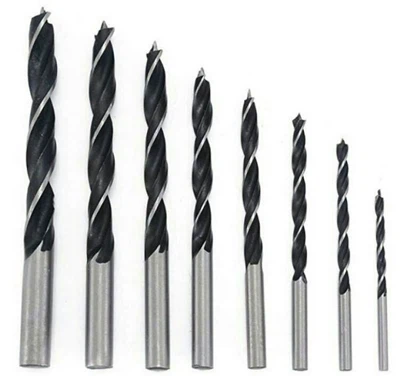
A drill bit works by rotating and cutting into a material to create a hole. The process involves several key components and principles that ensure the bit can effectively remove material and form a precise hole. Here's a detailed explanation of how a drill bit works:
Key Components of a Drill Bit
1.Shank:
Function: The shank is the part of the drill bit that fits into the drill chuck. It provides the connection between the drill and the bit.
Types: Common shank types include round shanks for standard drills and hex shanks for impact drivers.
2.Flutes:
Function: The flutes are the spiral grooves along the length of the drill bit. They help remove material from the hole as the bit rotates.
Design: The design of the flutes can vary, with some bits having more or fewer flutes depending on the intended use.
3.Cutting Edges:
Function: The cutting edges are the sharp parts at the tip of the drill bit that actually cut into the material.
Design: The angle and shape of the cutting edges can vary, with different designs optimized for different materials (e.g., wood, metal, masonry).
4.Point:
Function: The point is the very tip of the drill bit, which helps to start the hole and guide the bit into the material.
Types: Common point angles include 118 degrees for general-purpose bits and 135 degrees for more precise applications.
How a Drill Bit Works
1.Rotation:
The drill bit is attached to a power drill or hand drill, which provides rotational motion.
As the drill rotates the bit, the cutting edges engage with the material, cutting away small chips.
2.Material Removal:
The flutes on the drill bit help to lift and remove the cut material from the hole.
This continuous removal of material allows the bit to penetrate deeper into the material.
3.Penetration:
The cutting edges of the bit cut into the material, creating a hole.
The point of the bit helps to keep the bit centered and prevents it from wandering.
4.Cooling and Lubrication:
When drilling into hard materials like metal, it is often necessary to use a cutting fluid or lubricant to reduce heat and friction.
This helps to prolong the life of the bit and ensures a cleaner hole.
Tips for Effective Drilling
Secure the Material: Clamp the material to prevent it from moving while drilling.
Mark the Spot: Use a center punch or marker to mark the exact spot where you want to drill the hole.
Start Slow: Begin drilling at a slow speed to ensure the bit starts cutting smoothly.
Apply Steady Pressure: Apply gentle, steady pressure to allow the bit to cut efficiently without damaging the material.
Clear Debris: Periodically retract the bit to clear out chips and debris, especially when drilling deep holes.


