

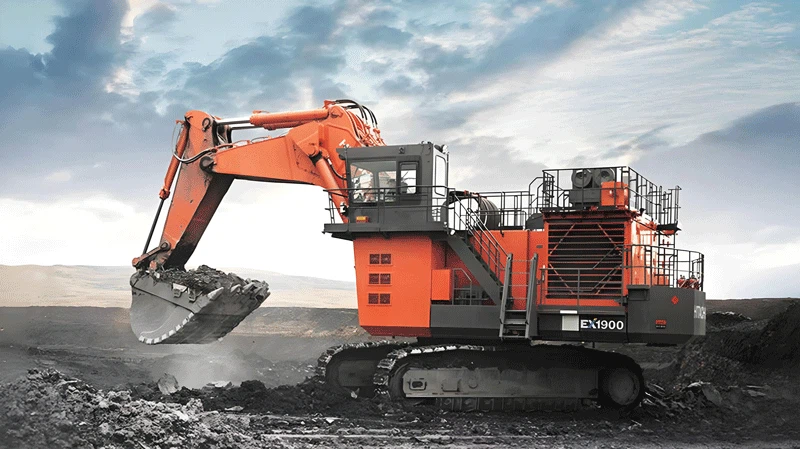
Excavators are able to spin (rotate) due to a specialized mechanism called the slewing ring. This mechanism allows the upper part of the excavator, including the cab, boom, arm, and bucket, to rotate 360 degrees around the lower frame (undercarriage). Here's a detailed explanation of how this works:
Key Components Involved in Rotation
1.Slewing Ring:
The slewing ring is a large, circular bearing that supports the upper structure of the excavator and allows it to rotate smoothly.
It consists of an inner race, an outer race, and rolling elements (usually ball bearings or rollers) that reduce friction between the races.
2.Slewing Motor:
The slewing motor is a hydraulic motor that provides the power needed to rotate the upper structure.
This motor is typically located near the slewing ring and is connected to it via a gear system.
3.Gear System:
The slewing motor drives a gear system that engages with the slewing ring, allowing the upper structure to rotate.
The gear system includes a planetary gear reduction mechanism that converts the high-speed, low-torque output of the motor into a low-speed, high-torque output suitable for rotating the upper structure.
How the Rotation Works
1.Operator Control:
The operator uses a control lever or joystick inside the cab to initiate rotation.
When the operator moves the control lever, hydraulic fluid is directed to the slewing motor, causing it to activate.
2.Motor Activation:
The slewing motor receives hydraulic power from the excavator's hydraulic system.
The motor converts the hydraulic pressure into mechanical energy, which drives the gear system.
3.Gear Engagement:
The gear system, driven by the slewing motor, engages with the slewing ring.
The rotation of the gear system causes the slewing ring to rotate, which in turn rotates the upper structure of the excavator.
4.Smooth Rotation:
The slewing ring's rolling elements (ball bearings or rollers) ensure smooth and low-friction rotation.
The design of the slewing ring and gear system allows for precise control and smooth movement, even under heavy loads.
Safety and Stability
Locking Mechanism: Some excavators have a locking mechanism that can be engaged to prevent rotation when not in use. This adds an extra layer of safety, especially during transportation or when working on slopes.
Weight Distribution: The excavator's weight is distributed evenly to maintain stability during rotation. The lower frame (undercarriage) provides a stable base, while the upper structure is designed to rotate without causing imbalance.
Maintenance
Regular maintenance of the slewing ring and associated components is crucial to ensure smooth and reliable rotation. This includes checking for wear and tear, lubricating the slewing ring, and ensuring that all bolts and fasteners are secure.
Conclusion
The ability of an excavator to spin is due to the slewing ring system, which is powered by a hydraulic motor and supported by a gear system. This mechanism allows the upper structure to rotate 360 degrees around the lower frame, providing the excavator with the flexibility and precision needed for various construction tasks.
does an excavator unscrew itself
No, excavators do not unscrew themselves. This is a common myth that has been debunked by experts and industry professionals.
Why Excavators Don't Unscrew Themselves
1.Slewing Ring Design:
Excavators use a slewing ring system to enable the upper cab to rotate. This system includes bearings, mounts, and a robust structure designed to handle continuous rotation. The slewing ring is made of high-strength steel and is designed to withstand heavy loads and constant turning.
2.Friction and Gravity:
The forces of friction and gravity work together to keep the upper cab securely attached to the lower frame. Even with continuous rotation, these forces prevent the cab from detaching.
3.Robust Construction:
Excavators are built to handle thousands of hours of continuous operation. The slewing ring and associated components are designed to lock up rather than loosen under normal operating conditions.
4.Maintenance and Safety:
Regular maintenance ensures that the slewing ring and other components remain in good condition. Any wear or damage would be detected and repaired before it could cause significant issues.

Conclusion
The idea that an excavator can unscrew itself after a certain number of rotations is a myth. The design of the slewing ring and the forces of friction and gravity ensure that the upper cab remains securely attached to the lower frame. Excavators are built to handle continuous rotation and are designed to be safe and reliable.
What are the main forces that keep the excavator's cab in place
The main forces that keep an excavator's cab in place include the following:
1. Slewing Ring Mechanism
The slewing ring, also known as a slewing bearing or turntable bearing, is a critical component that enables the upper structure (cab, boom, etc.) to rotate while keeping it securely attached to the lower frame. It consists of:
Raceways: The inner and outer raceways are the main circular tracks on which the rotating and stationary elements of the bearing interface.
Rolling Elements: These are positioned between the two raceways and facilitate smooth rotation with minimal friction.
Cage: Keeps the rolling elements evenly spaced and positioned, ensuring uniform load distribution.
2. Load Distribution
The slewing ring is designed to handle axial, radial, and moment loads. When the excavator's upper structure is subjected to forces during operation, the slewing ring distributes these forces through its components:
Axial Loads: Supported by the slewing ring to ensure stability during lateral movements.
Radial Loads: Handled to withstand vertical loads.
Moment Loads: The slewing ring also supports overturning moments, ensuring the upper structure remains securely attached.
3. High-Tensile Bolts
The primary attachment mechanism for the cab involves a pattern of high-tensile bolts, often ranging between 8-16 fasteners, depending on the machine. These bolts secure the upper structure to the lower frame, providing a robust connection that prevents the cab from detaching.
4. Hydraulic System
The slewing hydraulic system plays a crucial role in controlling the rotation of the cab. The hydraulic system outputs high-pressure oil to drive the rotation motor, which in turn transmits the speed and torque to the slewing ring through a planetary gear reduction mechanism. This system ensures smooth and controlled rotation while maintaining the cab's position.
5. Friction and Gravity
Friction between the rolling elements and raceways, combined with the force of gravity, helps keep the upper structure in place. The design of the slewing ring minimizes friction while ensuring sufficient resistance to prevent unwanted movement.
6. Safety and Design Features
Excavators are designed with safety features that further ensure the cab remains securely attached. For example:
ROPS (Roll-Over Protective Structure): Provides protection in case of rollover and helps secure the cab.
Parking Brake: Holds the machine immobile when not in operation, preventing any unintended movement.

In summary, the excavator's cab is kept in place by a combination of the slewing ring mechanism, load distribution, high-tensile bolts, hydraulic system, friction, gravity, and various safety features. These forces and components work together to ensure the cab remains securely attached and functions smoothly during operation.
do excavators unscrew themselves
Excavators do not unscrew themselves. This is a common myth that has been circulating for years, but it is not true. Excavators are designed with a slew ring system, which is a robust system of bearings, mounts, and caging that allows the upper cab to rotate. This system is designed to handle continuous rotation without loosening or unscrewing.
Even if an excavator were to spin continuously in one direction, the slew ring would lock up rather than unscrew. This is due to the design of the slew ring, which is intended to withstand thousands of hours of constant turning. Additionally, gravity and friction work together to keep the upper cab securely attached to the lower structure.

In summary, excavators are built to withstand the forces of rotation, and the idea that they can unscrew themselves is simply an urban legend.
how do excavators work
Excavators are versatile and powerful machines used in construction, mining, and landscaping. Understanding how they work involves looking at their key components and the principles that drive their operation.
Key Components of an Excavator
1.Undercarriage:
Tracks or Wheels: The undercarriage supports the excavator and provides mobility. Tracks offer better traction and stability on rough terrain, while wheels are more suitable for paved surfaces.
Slew Ring: This allows the upper part of the excavator to rotate 360 degrees, providing a wide range of motion.
2.Upper Structure:
Cab: The operator's compartment where controls are located. It includes joysticks, pedals, and a monitor for controlling the machine.
Engine: Provides power to the hydraulic system. Modern excavators often use diesel engines for their high torque and efficiency.
Hydraulic System: Consists of pumps, valves, and cylinders that convert the engine's mechanical energy into hydraulic power. This system powers the movement of the boom, arm, and bucket.
3.Working Attachments:
Boom and Arm: These are the long, articulated parts that extend from the excavator. The boom is the main arm, and the stick (or dipper) is the secondary arm that connects to the bucket.
Bucket: The digging tool at the end of the arm. It can be replaced with other attachments like hydraulic breakers, grapples, or augers.
How Excavators Work
1.Engine and Power Transmission:
The diesel engine powers the hydraulic pump, which generates high-pressure hydraulic fluid.
This fluid is then distributed through a series of valves to the hydraulic cylinders and motors.
2.Hydraulic System:
Pump: Converts mechanical energy from the engine into hydraulic energy by pressurizing the hydraulic fluid.
Valves: Control the flow and direction of the hydraulic fluid, allowing precise control of the excavator's movements.
Cylinders: Convert hydraulic energy back into mechanical energy, moving the boom, arm, and bucket.
3.Operator Controls:
The operator uses joysticks and pedals inside the cab to control the excavator's movements.
Joysticks control the boom, arm, and bucket, while pedals control the tracks or wheels for movement and rotation.
4.Working Mechanism:
Digging: The operator manipulates the boom, arm, and bucket to dig into the ground. The hydraulic system provides the necessary force.
Swiveling: The upper structure can rotate 360 degrees, allowing the excavator to move material to different locations without repositioning the entire machine.
Lifting and Loading: The excavator can lift and load materials into trucks or other equipment using its hydraulic system.

Additional Features
Attachments: Excavators can be fitted with various attachments to perform different tasks. For example, a hydraulic breaker can be used for demolition, while an auger can be used for drilling holes.
Safety Features: Modern excavators come with advanced safety features, such as rollover protection systems (ROPS), seatbelts, and cameras to improve visibility.
Summary
Excavators work by using a powerful hydraulic system to control the movement of the boom, arm, and bucket. The operator uses controls in the cab to manipulate these components, allowing the machine to dig, lift, and move materials efficiently. The versatility and power of excavators make them indispensable in construction and mining operations.
do you need a license to operate a mini excavator
In most cases, you do not need a specific license to operate a mini excavator. However, there are certain requirements and considerations depending on the region and the nature of the work:
General Requirements
1.No Specific License Required:
In many regions, mini excavators (typically those under 6,000 kg) do not require a specific heavy equipment license.
For non-commercial use on private property, no certification or license is typically required.
2.Proof of Competency:
Employers or site managers may require proof of competency. This can be achieved through formal training, practical assessments, or certification courses.
In Australia, for example, operators can obtain a certificate of completion for the nationally accepted training module RIIMPO320 – Conduct civil construction excavator operations.
3.Training and Certification:
While not mandatory, formal training is highly recommended to ensure safe and efficient operation. Training courses are available that cover safety protocols, operation techniques, and maintenance.
In the UK, operators may need a CSCS (Construction Skills Certification Scheme) card for certain construction site activities.
Specific Situations
1.Commercial Use:
If the mini excavator is used for commercial purposes, such as on construction sites, employers may require operators to have formal training or certification.
In some cases, a valid driver's license may be required.
2.Transportation:
If the mini excavator is driven on public roads, a valid driver's license may be necessary.

Recommendations
Formal Training: Even if not legally required, formal training is highly beneficial. It ensures operators are competent and can handle the equipment safely.
Check Local Regulations: Requirements can vary by region, so it's important to check local regulations and employer policies.
In summary, while a specific license is generally not required to operate a mini excavator, proof of competency and formal training are highly recommended to ensure safety and efficiency.
do you need a cdl to operate an excavator
You do not need a Commercial Driver's License (CDL) to operate an excavator in most cases. However, some employers may prefer or require operators to have a CDL, especially if the equipment is driven from one job site to another. Additionally, if the excavator or any attached trailer exceeds certain weight limits (e.g., a gross vehicle weight rating over 26,000 pounds), a CDL may be required.

In general, while a CDL is not strictly necessary for operating an excavator on-site, having one can enhance your employability and may be required by certain employers. It's always a good idea to check with your employer or the specific job requirements to determine if a CDL is needed for the role.
can you actually unscrew an excavator
No, you cannot actually "unscrew" an excavator. The idea that an excavator can unscrew itself by rotating is an urban legend and not based on reality. Excavators are designed with a slew ring system that allows the upper cab to rotate smoothly and consistently. This system is robust and designed to handle thousands of hours of continuous rotation without loosening. Additionally, gravity and friction work together to keep the upper cab securely attached to the lower structure, preventing any possibility of the machine unscrewing itself.


