

What are the differences between dry grinding and wet grinding of stone, and how to choose between them?
When stone grinding is done without water, it is called dry grinding; when water is added during grinding, it is known as wet grinding. What are the differences, and how to choose?
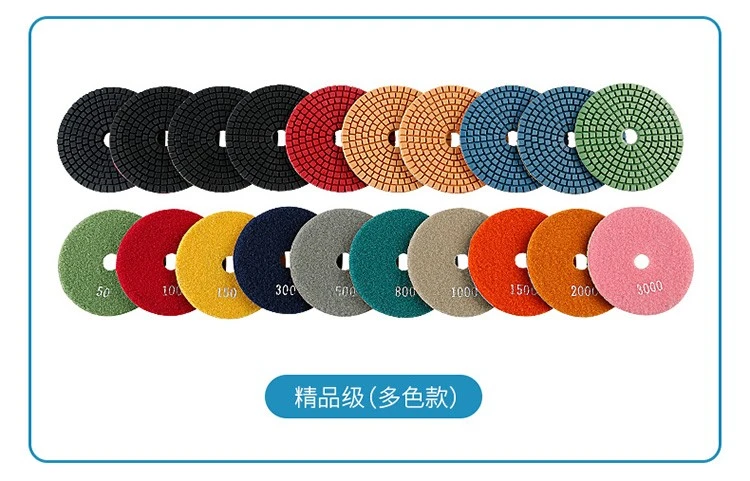
Water grinding disc
Differences between dry grinding and wet grinding:
Use of Grinding Discs:
The current mainstream grinding discs on the market are mostly made of synthetic diamond particles and resin binders. Diamonds, commonly known as diamonds, and resins, broadly speaking, are collectively referred to as various high polymers that can be used as raw materials for plastics.
Heat Generation during Stone Grinding:
The grinding of stone causes friction between the grinding disc and the stone surface, generating high temperatures under the machine's rotation speed and pressure. This temperature can melt ordinary resins. Inferior grinding discs are prone to deformation due to this.
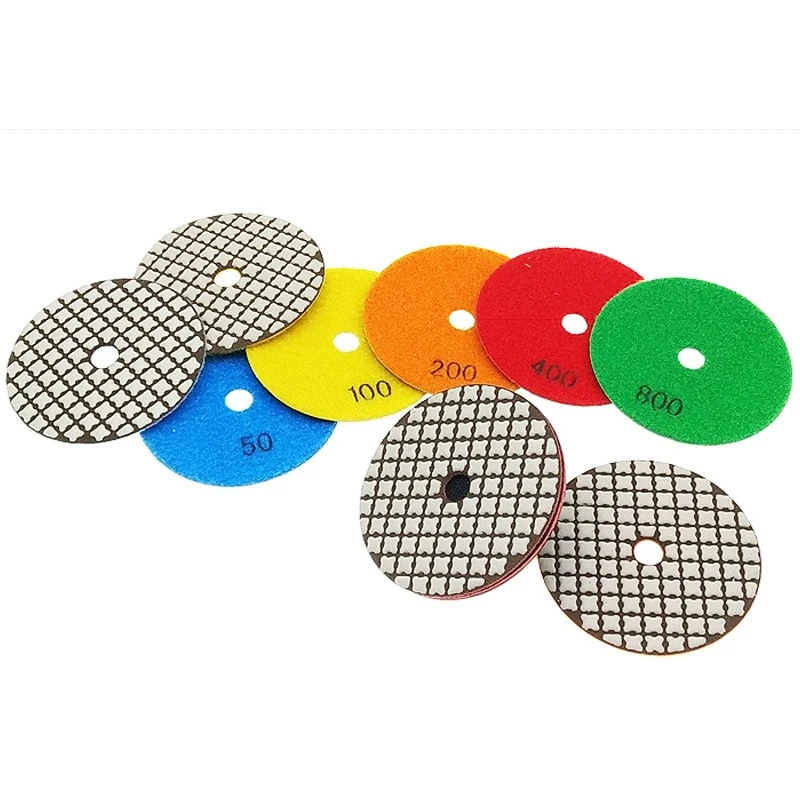
Dry grinding disc
Cooling Effect of Water:
Wet grinding with water can accelerate the dissipation of heat, requiring slightly lower specifications for the components of the grinding disc. In contrast, dry grinding, without the cooling effect of water, dissipates heat slowly, so the resin used in dry grinding discs must be of high quality and capable of withstanding higher temperatures.
In summary:
Due to the composition, dry grinding discs can be used for wet grinding. Ordinary wet grinding discs cannot be used for long periods of dry grinding. Discs made with high-quality resins can be used for both dry and wet grinding.
How to choose a grinding disc:
For dry grinding without water, heat dissipation is slow, so the resin used in dry grinding discs must be of high quality and resistant to high temperatures.
1. For dry grinding without water, heat dissipation is slow, so the resin used in dry grinding discs must be of high quality and resistant to high temperatures.
2. For wet grinding with water, the accelerated heat dissipation allows for slightly lower requirements for the components of the grinding disc.
3. Due to the composition, dry grinding discs can be used for wet grinding, but ordinary wet grinding discs should not be used for long periods of dry grinding. Discs made with high-quality resins can be used for both dry and wet grinding. Dry grinding is not absolute without water; if during the grinding process of dark stone, whitening is observed, a little water can be added during grinding for better results.
When to use wet grinding:
1. High temperatures generated during stone grinding can cause some damage to the stone's structural crystals. Stone subjected to high temperatures is prone to a series of issues such as loss of luster, cracking, and powdering.
2. Adding water during stone grinding can accelerate heat dissipation and reduce damage to the stone. Stone polished with wet grinding under natural temperatures has a soft, moist, and crystal-clear luster.
3. Under dry grinding conditions, the instantaneous heat generated by friction has a certain destructive effect on the crystal structure of the stone, so the luster produced by dry grinding has a dazzling, burnt, dry, and not transparent appearance.
When to use dry grinding:
1. Stones without protection treatment:
Unprotected stones are prone to water absorption. If wet grinding is used to open the stone surface, the stone's water absorption will extend the construction period. Therefore, dry grinding can be used to open the surface and apply the protective agent before applying a protective coating.
2. Grinding and polishing process:
Wet grinding is used for the leveling and optimization stages of stone grinding. In the polishing stage, dry grinding can be used to speed up the luster. (The specific method is to grind with water to 1000 mesh, after which the stone can be ground with less water or no water for semi-dry grinding or complete dry grinding. In practical application, it is found to be a very practical technique that helps the stone to shine.)
3. Walls, edges, and countertops:
Walls must be dry ground because they do not have the conditions for wet grinding. Imagine a customer's beautiful living room with new furniture, and the hand grinder throws slurry everywhere...
The finishing work after stone grinding, such as wall edges, and corners where large machines cannot reach, can be dry ground. Also, for lines, small area defects, and countertop repairs, dry grinding is more convenient.


