

Marble detailed processing process
The main processes of marble processing are sawing, grinding and polishing, cutting, chiseling, auxiliary processing, and inspection and repair.
(1) Block cutting machne
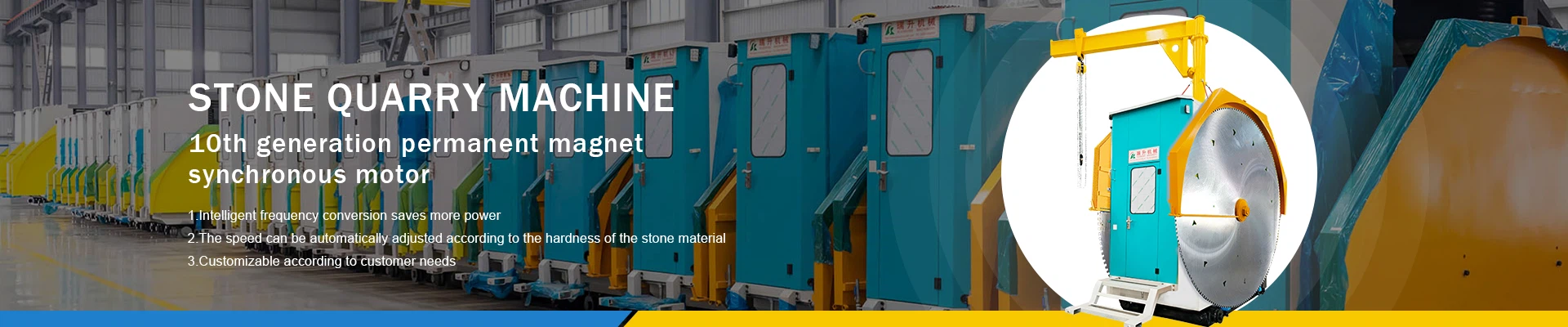
It is to use a stone saw to saw the marble block into a rough board of the required thickness (generally 20mm or 10mm thick), or a semi-finished product in the shape of strips or blocks. This process belongs to the rough processing process. Commonly used equipment for sawing includes frame-type diamond saws for marble, single-blade bidirectional cutting machines, large-diameter circular saws, etc. Traditional swing-type sand saws have been gradually eliminated due to low efficiency and poor sawing quality.
The most advanced ultra-thin diamond wire saw.
(2) Grinding and polishing process, Marble detailed processing process
The purpose is to further process the sawn rough board so that the thickness, flatness, and glossiness of the endurance board meet the requirements. This process needs to be completed through several steps. First, it must be rough ground and leveled, and then it must go through semi-fine grinding, fine grinding, fine grinding, and polishing. It is the most complicated operation in marble processing. Only through grinding and polishing can the inherent color, pattern, and gloss of the decorative board be fully displayed to achieve the best decorative effect. Commonly used equipment for grinding and polishing include ten-head marble automatic continuous grinding and polishing machines, bridge grinding machines, hand-held grinding machines, small disc grinding machines, large disc grinding machines, reverse rough grinding machines, etc. The grinding tools and abrasives used in the grinding machine gradually reduce the particle size as the polishing accuracy increases. Commonly used abrasives include corundum, silicon carbide, artificial diamond, and cubic boron nitride.
(3) Cutting process
The rough board or polished board is cut into shapes according to the length and width required by the order by a cutting machine to obtain the required specification board. Commonly used equipment for cutting processing includes longitudinal multi-saw blade cutting machines, double saw blade cutting machines, horizontal cutting machine, bridge cutting machine, cantilever cutting machines, hand-cranked cutting machine, etc.
(4) Auxiliary processing
In addition to the above main processes, marble processing often requires edge grinding, chamfering, hole opening, drilling, milling lace, etc. according to the specific needs of decoration. Commonly used equipment includes automatic edge grinding and chamfering machines, special stone profile milling machines, thin-wall drilling machines, handheld diamond circular saws, handheld grinding and polishing machines, etc.
(5) Inspection and repair process
Natural marble slabs inevitably have cracks and holes, and defects such as fractures, scratches, and edge collisions often occur during the processing process. After cleaning and inspection, genuine products can be put into storage, and those with minor defects can be bonded and repaired to reduce the scrap rate. This process is usually done manually. Some imported production lines use automatic continuous repair machines, and the repaired parts are required to be basically consistent with the color of the original material. Commonly used automatic continuous repair machines, blowing and drying machines, or manual inspection and manual repair are used.
(6) Chiseling and cutting
It is an ancient stone processing method. This method is simple, flexible, and convenient. It is suitable for products with complex shapes or low surface accuracy requirements. Such as stone carvings, complex-shaped building components, and rough-finished decorative stones such as rock reef surfaces, convex surfaces, mesh surfaces, and hammer surfaces. Commonly used hand tools include hammers, chopping axes, chisels, and chisels. Some processing can be done with pneumatic rock drills, stone splitters, stone planers, sandblasters, etc.
Marble detailed processing process


