

An excavator is a heavy construction equipment used primarily for digging, grading, and moving materials such as soil, rocks, and gravel. It is also known as a digger, backhoe, or 360-degree excavator. Excavators are versatile machines that come in various sizes and configurations, making them suitable for a wide range of applications, from small construction sites to large-scale mining operations.
Key Components of an Excavator
1.Cab: The operator's compartment where the controls for the machine are located. It provides a comfortable and safe environment for the operator.
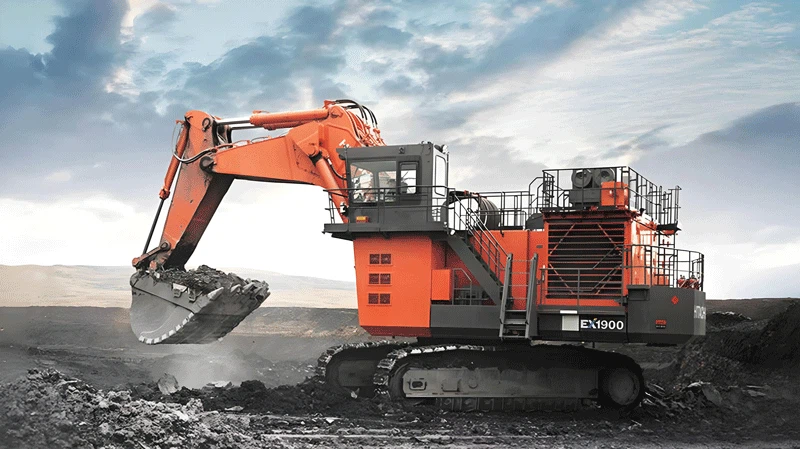
2.Boom and Arm: These are the primary components used for digging. The boom is the long, hinged arm that extends from the machine, while the arm (or stick) is the shorter, hinged section that attaches to the boom.
3.Bucket: The bucket is attached to the end of the arm and is used for scooping and moving materials. There are various types of buckets available, including general-purpose buckets, rock buckets, and grading buckets.
4.Undercarriage: This is the lower part of the excavator that supports the machine and allows it to move. It includes tracks or wheels, depending on the type of excavator.
5.Swing Mechanism: The upper part of the excavator can rotate 360 degrees on its base, allowing the machine to dig and move materials in all directions without needing to reposition the entire machine.
6.Hydraulic System: Excavators are powered by hydraulic systems that provide the force needed to operate the boom, arm, bucket, and other attachments. The hydraulic system is driven by a diesel engine.
Types of Excavators
1.Compact Excavators: These are smaller machines designed for tight spaces and urban construction sites. They are often used for landscaping, utility work, and small-scale excavation.
2.Mini Excavators: Similar to compact excavators but even smaller, often used for residential construction and landscaping.
3.Mid-Size Excavators: These are larger than compact and mini excavators and are suitable for medium-sized construction projects.
4.Large Excavators: These are heavy-duty machines designed for large-scale construction, mining, and earthmoving projects. They are capable of handling heavy loads and large volumes of material.
5.Crawler Excavators: These machines have tracks (caterpillar tracks) for movement, providing better stability and traction on rough terrain.
6.Wheeled Excavators: These machines have wheels instead of tracks, making them more mobile and easier to transport between job sites.
Applications of Excavators
1.Construction: Excavators are used for digging foundations, grading land, and moving materials on construction sites.
2.Mining: Large excavators are used for extracting minerals and ores from open-pit mines.
3.Landscaping: Mini and compact excavators are often used for grading, digging trenches, and planting trees.
4.Demolition: Excavators equipped with demolition attachments (such as hydraulic breakers) are used to break up concrete and other structures.
5.Road Building: Excavators are used to dig and grade the ground for road construction.
6.Utility Work: Excavators are used to dig trenches for laying pipes and cables.

Advantages of Excavators
1.Versatility: Excavators can be equipped with various attachments (such as buckets, breakers, and augers) to perform different tasks.
2.Precision: The hydraulic system allows for precise control over the digging and movement of materials.
3.Stability: The design of the undercarriage and the ability to rotate 360 degrees provide stability and flexibility.
4.Efficiency: Excavators can move large volumes of material quickly, making them efficient for large-scale projects.
In summary, an excavator is a powerful and versatile piece of heavy equipment essential for many construction, mining, and landscaping projects. Its ability to dig, move, and grade materials makes it an indispensable tool in modern construction and earthmoving operations.
Can you explain the differences between crawler and wheeled excavators
Crawler and wheeled excavators are two main types of excavators, each designed for different applications and environments. Here are the key differences between them:
1. Mobility and Stability
Crawler Excavators:
Tracks: Equipped with caterpillar tracks that provide excellent traction and stability on rough terrain.
Stability: The tracks distribute the weight of the machine over a larger surface area, reducing ground pressure and preventing sinking. This makes crawler excavators ideal for soft or uneven ground.
Maneuverability: The tracks allow for smooth and precise movement, especially in tight spaces.
Speed: Generally slower on roads compared to wheeled excavators.
Wheeled Excavators:
Wheels: Equipped with rubber tires that provide better mobility on paved surfaces.
Stability: Less stable on soft or uneven ground compared to crawler excavators. They may require outriggers or stabilizers for additional support.
Maneuverability: More agile on hard surfaces and can travel faster on roads, making them easier to transport between job sites.
Speed: Faster on paved roads, which reduces the time needed for transportation.
2. Ground Pressure
Crawler Excavators:
Low Ground Pressure: The tracks spread the weight of the machine over a larger area, reducing ground pressure. This is crucial for working on soft or sensitive ground, such as wetlands or newly graded areas.
Less Compaction: Less likely to compact the soil, which is important for landscaping and environmental projects.
Wheeled Excavators:
Higher Ground Pressure: The rubber tires concentrate the weight on smaller contact points, resulting in higher ground pressure. This can lead to soil compaction and potential damage to soft ground.
Surface Damage: More likely to leave marks or damage paved surfaces.
3. Transportation
Crawler Excavators:
Self-Propelled: Can move under their own power but are slower on roads.
Transportation: Often require a flatbed trailer for long-distance transport due to their lower speed and higher ground clearance.
Wheeled Excavators:
Road Mobility: Can travel faster on roads, reducing the need for frequent trailer transport.
Ease of Transport: Easier to move between job sites without the need for a trailer, especially for short distances.
4. Applications
Crawler Excavators:
Heavy-Duty Applications: Ideal for construction, mining, and large-scale earthmoving projects where stability and traction are crucial.
Rough Terrain: Suitable for working in rugged, uneven, or soft ground conditions.
Precision Work: The tracks provide better control and precision for tasks like grading and trenching.
Wheeled Excavators:
Urban and Residential Projects: Better suited for urban construction, landscaping, and small-scale projects where mobility and speed are important.
Paved Surfaces: Ideal for work on roads, parking lots, and other hard surfaces.
Multi-Purpose Use: Can be easily transported to different job sites, making them versatile for various tasks.
5. Maintenance and Cost
Crawler Excavators:
Maintenance: Tracks require more maintenance and are more prone to wear and tear compared to wheels.
Cost: Generally more expensive due to the complexity of the track system and higher maintenance costs.
Wheeled Excavators:
Maintenance: Tires are easier to maintain and replace compared to tracks.
Cost: Typically less expensive to purchase and maintain.

Summary
Crawler Excavators are best for heavy-duty applications, rough terrain, and projects requiring stability and precision.
Wheeled Excavators are more suitable for urban and residential projects, paved surfaces, and situations where mobility and speed are important.
Choosing between a crawler and wheeled excavator depends on the specific requirements of the job, the terrain, and the working conditions.
how does an excavator work
An excavator is a versatile and powerful piece of heavy equipment designed primarily for digging, grading, and moving materials. It operates through a combination of mechanical and hydraulic systems that allow it to perform a wide range of tasks efficiently. Here's a detailed explanation of how an excavator works:
Key Components and Their Functions
1.Cab:
Operator Controls: The cab houses the operator's seat, control levers, pedals, and monitors. The operator uses these controls to maneuver the excavator and operate its various functions.
Safety Features: The cab is designed to protect the operator from environmental hazards and includes features like roll-over protection (ROPS) and falling-object protection (FOPS).
2.Undercarriage:
Tracks or Wheels: The undercarriage supports the excavator and allows it to move. Crawler excavators use tracks for better traction and stability on rough terrain, while wheeled excavators use rubber tires for mobility on paved surfaces.
Ground Pressure: The design of the undercarriage affects the ground pressure exerted by the machine. Tracks distribute the weight over a larger area, reducing ground pressure and preventing sinking.
3.Swing Mechanism:
Upper Structure: The upper part of the excavator (including the cab, boom, and arm) can rotate 360 degrees on the undercarriage. This allows the excavator to dig and move materials in any direction without needing to reposition the entire machine.
Rotating Platform: The rotating platform is supported by a large bearing that allows smooth and precise rotation.
4.Boom and Arm:
Boom: The long, hinged arm that extends from the machine. It provides the vertical reach needed for digging and lifting.
Arm (Stick): The shorter, hinged section attached to the boom. It provides additional reach and allows for precise control over the bucket.
Hydraulic Cylinders: These cylinders control the movement of the boom and arm. They extend and retract to position the bucket accurately.
5.Bucket:
Types of Buckets: Excavators can be equipped with various types of buckets, including general-purpose buckets, rock buckets, grading buckets, and specialized buckets for specific tasks.
Attachments: Other attachments like hydraulic breakers, augers, and grapples can be used for different applications.
6.Hydraulic System:
Engine: The excavator is powered by a diesel engine that drives the hydraulic system.
Hydraulic Pumps: The engine powers hydraulic pumps that generate high-pressure fluid. This fluid is used to operate the hydraulic cylinders and motors.
Hydraulic Cylinders: These are used to control the movement of the boom, arm, and bucket. They convert hydraulic pressure into mechanical force.
Hydraulic Motors: These motors power the tracks or wheels and the swing mechanism, allowing the excavator to move and rotate.
How the Excavator Operates
1.Starting the Engine:
The operator starts the diesel engine, which powers the hydraulic system and other components.
2.Moving the Machine:
The operator uses the control levers and pedals to move the excavator. For crawler excavators, the tracks are controlled by levers that adjust the speed and direction. For wheeled excavators, the wheels are controlled similarly.
The excavator can move forward, backward, and turn in place.
3.Swinging the Upper Structure:
The operator uses a control lever to rotate the upper structure 360 degrees. This allows the excavator to face different directions without moving the undercarriage.
4.Controlling the Boom and Arm:
The operator uses control levers to extend, retract, lift, and lower the boom and arm. The hydraulic cylinders provide the necessary force to move these components.
The operator can position the bucket precisely to dig, lift, or place materials.
5.Operating the Bucket:
The operator controls the bucket using a lever that operates the hydraulic cylinder attached to the bucket. This allows the bucket to open and close, scoop up materials, and dump them.
Different buckets and attachments can be used for specific tasks, such as breaking concrete with a hydraulic breaker or drilling with an auger.
6.Performing Tasks:
Digging: The excavator digs by positioning the bucket in the ground and pulling it towards the machine. The operator controls the depth and angle of the dig.
Lifting and Moving Materials: The excavator can lift materials using the bucket and move them to another location. The operator controls the height and position of the bucket.
Grading: The excavator can be used to grade land by adjusting the bucket's angle and position to create a smooth, level surface.
Safety and Efficiency
Safety Features: Modern excavators come with advanced safety features, including cameras, sensors, and alarms to help the operator avoid obstacles and ensure safe operation.
Efficiency: The hydraulic system allows for precise control and efficient operation, making excavators highly effective for various tasks.
In summary, an excavator works through a combination of mechanical and hydraulic systems controlled by the operator. Its versatility and precision make it an essential tool in construction, mining, and landscaping projects.
What are the different types of excavators
Excavators come in various types, each designed to meet specific needs and applications. Here's a comprehensive overview of the different types of excavators:
1. Crawler Excavators
Description: Also known as tracked excavators, these machines move on large tracks that provide excellent stability and traction, especially on soft or uneven ground.
Applications: Ideal for construction, mining, demolition, and forestry. They are commonly used for digging foundations, trenching, and moving earth.
2. Wheeled Excavators
Description: These excavators run on rubber tires, providing better mobility on paved surfaces and allowing faster travel between job sites.
Applications: Best suited for urban construction, roadwork, and maintenance jobs where speed and maneuverability are important.
3. Mini Excavators
Description: These are smaller and lighter, making them easier to transport and operate in tight spaces.
Applications: Ideal for small-scale jobs, landscaping, and projects in confined areas.
4. Long-Reach Excavators
Description: Similar to standard excavators but with an extended arm and boom, allowing them to reach up to 100 feet.
Applications: Used for challenging and tight excavation or demolition jobs.
5. Dragline Excavators
Description: These heavy-duty machines are larger than standard excavators and are often assembled on-site. They use a bucket system that drags along the surface with chains and wire rope.
Applications: Best suited for large applications such as harbor construction, canal dredging, and strip mining.
6. Backhoe Excavators
Description: Often confused with crawler excavators, backhoe loaders have the boom attached to the back of the equipment.
Applications: Versatile for digging tasks, soil leveling, and grading. They can also move larger quantities of materials.
7. Hydraulic Shovels
Description: Designed for heavy-duty tasks within the mining industry, these machines feature powerful lifting arms and a large bucket.
Applications: Suitable for mining, hydro excavation, and intense digging processes.
8. Suction Excavators
Description: These excavators use water pressure to loosen soil and a suction pipe to remove it.
Applications: Ideal for excavation and trenching jobs that require delicate, precise soil extraction without damaging surrounding areas.
9. Amphibious Excavators
Description: Designed for underwater dredging, these excavators have an amphibious undercarriage that keeps them afloat.
Applications: Used for underwater projects, controlling vegetative growth, and installing underwater pipes and cables.
10. Spider Excavators
Description: These excavators have spider-like legs that can function independently, providing enhanced stability on steep hillsides and challenging terrain.
Applications: Ideal for forestry applications and projects on steep slopes.
11. Skid Steer Excavators
Description: Effective for clearing debris and construction sites.
Applications: Not recommended for snowy or muddy terrain due to their wheel-based design.
12. Knuckle Boom Excavators
Description: A variation of the standard excavator with an additional joint on the boom/arm section, allowing the arm and bucket to move horizontally.
Applications: Ideal for tight job sites with obstacles.

Choosing the Right Excavator
Selecting the appropriate excavator depends on factors such as the project type, terrain, available space, and budget. For example, crawler excavators are best for heavy-duty tasks on rough terrain, while wheeled excavators are ideal for urban projects and roadwork. Mini excavators are perfect for small-scale jobs in tight spaces, whereas long-reach excavators are necessary for hard-to-reach areas.
who makes link belt excavators
Link-Belt excavators are manufactured by LBX Company, which is headquartered in Lexington, Kentucky. LBX Company is a subsidiary of the Japanese conglomerate Sumitomo Heavy Industries. The company has a long history, tracing its roots back to the Link-Belt Machinery Company, which was founded in 1880. In 1998, LBX Company was established as a standalone entity to focus on the production and marketing of Link-Belt excavators, forestry equipment, and material handlers.

who makes the best mini excavator
Based on the latest information, here are some of the best mini excavator manufacturers and their notable models:
Yanmar
Model: ViO35-6A
Features: Fuel-efficient 35HP diesel engine, auxiliary hydraulic quick coupler lines, auto deceleration and combustion feedback, compact 8'2" track width, 360-degree rotation with zero rear tail swing, 11'3" maximum digging depth.
Brand: Yanmar
Category: Mini Excavator
Model/Style: ViO35-6A
Boleo
Model: ZEWEIT X
Features: Rubber-tracked mini excavator with offset booms for construction, landscaping, and demolition duties, ideal for narrow spaces.
Brand: Boleo
Category: Mini Excavator
Model/Style: ZEWEIT X
Kubota
Model: K008-5
Features: Best-in-class 5'9" maximum digging depth, smooth hydraulic roading with auxiliary connections, industrial SAE certified 4.1 liter Kubota engine, steel-reinforced rubber tracks, compact 7'7" track adjustment width, proportional joystick controls.
Brand: Kubota
Category: Mini Excavator
Model/Style: K008-5
Takeuchi
Model: TB335R
Features: Minimal 2'7" tail swing radius, variable track widths down to 4'11", sliding front glass for optimal ventilation, customizable and password-protected settings, easy access to maintenance components, advanced Takeuchi Fleet Management telemetry.
Brand: Takeuchi
Category: Mini Excavator
Model/Style: TB335R
Caterpillar
Model: 308CR
Features: Powerful Cat C3.6 DIT diesel engine, long-life reinforced boom and arm, low-effort pilot joystick controls, standard auxiliary hydraulic lines, air suspension seat, advanced Product Link telematics.
Brand: Caterpillar
Category: Mini Excavator
Model/Style: 308CR
Bobcat
Model: E10
Features: Excellent power-to-weight balance, compact dimensions with 5'4" width, made in the USA using global components, pressurized cab with heat and air options, smooth low-speed controls, available boom and arm configurations, compatibility with hundreds of Bobcat attachments.
Brand: Bobcat
Category: Mini Excavator
Model/Style: E10
SANY
Features: Efficient and innovative mini excavators known for their performance and eco-friendliness, with a focus on hydraulic and electronic control technologies.
Brand: SANY
Category: Mini Excavator
Model/Style: Various models available
XCMG Group
Features: Mini excavators covering various working ranges and application scenarios, known for their efficient operational capability, excellent fuel economy, and comfortable operating environment.
Brand: XCMG Group
Category: Mini Excavator
Model/Style: Various models available

LiuGong
Features: High-performance mini excavators designed for urban construction, landscaping, small engineering projects, and indoor renovations, with excellent operational performance and efficient energy consumption.
Brand: LiuGong
Category: Mini Excavator
Model/Style: Various models available
Zoomlion
Features: High-performance mini excavators suitable for narrow urban environments, landscaping, and small-scale infrastructure construction projects, with excellent performance and low energy consumption.
Brand: Zoomlion
Category: Mini Excavator
Model/Style: Various models available
These brands are highly regarded for their quality, performance, and reliability, making them top choices for mini excavators.
how much does a excavator bucket weigh
The weight of an excavator bucket can vary significantly based on the size of the excavator, the type of bucket, and its intended use. Here are some general weight ranges and considerations:
Mini Excavator Buckets
Weight Range: 100 kg to 300 kg (220 lbs to 660 lbs)
Capacity: 0.1 to 0.4 cubic meters
Features: Mini excavator buckets are designed for compact machines and are typically lighter to match the smaller size and lifting capacity of these machines.
Medium-Sized Excavator Buckets (4.5-20+ Tonnes)
Weight Range: 300 kg to 1,000 kg (660 lbs to 2,200 lbs)
Capacity: 0.4 to 1.2 cubic meters
Features: These buckets are designed for a wide range of applications and are typically used in construction, landscaping, and utility work.
Large Excavator Buckets (20+ Tonnes)
Weight Range: 1,000 kg to over 2,000 kg (2,200 lbs to 4,400 lbs)
Capacity: 1.2 to 5.0 cubic meters
Features: Large excavator buckets are designed for heavy-duty applications such as mining and quarrying. They are made from high-strength, wear-resistant steel to withstand demanding conditions.

Factors Affecting Bucket Weight
Bucket Size and Capacity: Larger buckets require more material and thus weigh more.
Material Construction: High-strength, wear-resistant steel is commonly used, which can increase weight.
Specialized Features: Features like reinforced cutting edges, wear plates, and quick coupler systems can add to the overall weight.
Specific Examples
Caterpillar Mini Excavator Bucket: A standard digging bucket for a mini excavator might weigh around 227 kg (500 lbs) with a capacity of 0.17 cubic meters.
Peterson Cat Heavy Duty Capacity Bucket: For mini excavators, these buckets can weigh around 103 kg (227 lbs) with a capacity of 0.5 cubic meters.
Understanding the weight of the excavator bucket is crucial for ensuring proper machine balance, operational safety, and maximizing productivity. It's important to select a bucket that matches the excavator's lifting capacity and the specific requirements of the job.
What are the common materials used in excavator buckets
Excavator buckets are typically made from high-strength steel alloys designed to withstand the extreme forces and abrasive conditions encountered in heavy-duty digging and material handling operations. Here are some common materials used in excavator buckets:
High-Strength Steel Alloys
HARDOX: A wear-resistant steel known for its high hardness and ability to resist abrasion and impacts. It is commonly used for the bucket shell and other components due to its excellent durability.
BISALLOY: Another high-strength steel alloy used for its durability and resistance to wear and tear.
AR Steel Plate: Such as AR400 and AR500, these materials provide high hardness and wear resistance, making them suitable for the bucket's shell and teeth.
ASTM A572 Grade 50: A high-strength steel that offers good structural integrity and wear resistance, often used for excavator buckets.
Reinforced Components
Hardened Steel Inserts: Used for cutting edges and side plates to provide extra reinforcement and resistance to wear and tear.
Replaceable Wear Liners: Many buckets include these to protect against prolonged abrasion, extending the bucket's lifespan.
Cast Components
Critical Areas: Some buckets incorporate cast components in areas that require enhanced durability and structural integrity.

Composite Designs
Layered Steel Constructions: Some advanced bucket designs use composite materials or layered steel to optimize performance. For example, a wear-resistant outer layer bonded to a more ductile inner layer can provide abrasion resistance while maintaining toughness.
Bucket Teeth Materials
Through-Hardened Alloy Steel: Commonly used for bucket teeth due to its high hardness and resistance to wear and impact.
White Iron Castings: Used in some applications for their exceptional wear resistance, especially in highly abrasive conditions.
Hardfacing and Overlays: Techniques that apply a layer of wear-resistant material to the surface of the tooth to enhance its durability.
These materials and designs work together to ensure that excavator buckets are durable, efficient, and capable of withstanding the demands of various excavation tasks.


